Most digital transformation in manufacturing fails for a boring reason: the company buys advanced technology before it can trust its own data. If your floor still lives on spreadsheets, paper travelers, and tribal knowledge, that trap is easy to fall into.
You feel the pressure from every side. Finance is pushing a new ERP, quality wants automated inspection, and someone always brings up AI. But fund any of them first, and you’ll bolt smart tools onto numbers you can’t rely on.
For a $10M to $200M manufacturer without a global transformation budget, the first move is shop-floor data capture, not AI. Get a trustworthy record of what got made, when, and with how much scrap and downtime. Every later step, from inventory to quality to predictive maintenance, depends on it.
This guide lays out what to automate first, and in what order to tackle the rest. Want a partner to plan and build it with you? That’s what our digital transformation services are for.
What Smart Manufacturing Really Means for a Mid-Market Plant
Let’s kill a myth first. Smart manufacturing isn’t a robot army or a lights-out factory but rather a way of running the plant on solid data. For a company your size, it starts with something dull but valuable: swapping late, patchy, disconnected information for numbers you can trust.
What smart manufacturing isn’t:
- A sensor on every machine
- A weekend rip-and-replace of every old system
- An Industry 4.0 platform bought before you’ve decided what it’s for
Most Industry 4.0 tooling was built for global plants with enterprise budgets. Therefore, on a mid-market floor, it’s overkill.
The appetite is real, though. In Deloitte’s 2025 Smart Manufacturing and Operations Survey, 92% of manufacturers called it their top competitiveness driver for the next three years. The ones already investing booked production gains of 10% to 20%. They’re great numbers, but don’t read them as a reason to buy the most advanced system first. Those gains only appear when the underlying data is dependable. A system that fits how your plant runs, rather than the reverse, is the whole point of solid manufacturing software development.
Digital Transformation in Manufacturing for Mid Market Plants Step-by-Step
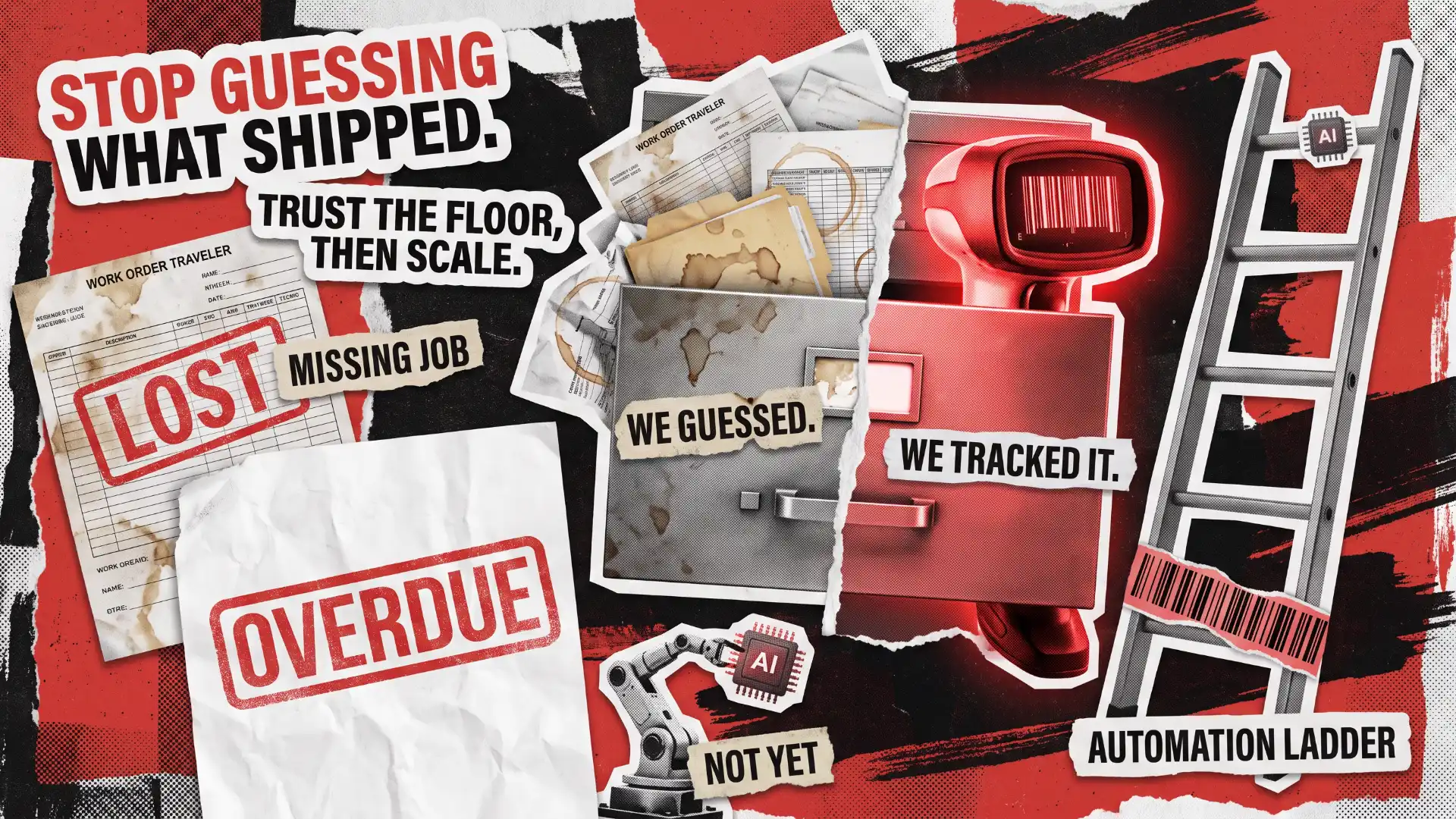
Treat digital transformation in manufacturing like a ladder, not a shopping list. Every rung builds the data foundation the next one needs.
1
Shop-floor data capture
Trusted production facts
2
Inventory and material planning
Reliable material visibility
3
Quality and traceability
Process control you can prove
4
Predictive maintenance
Early warning on your key machines
5
Connected systems
Cross-plant optimization and AI readiness
The rule is simple. Don’t climb the ladder because a technology is trendy or a demo dazzled you. Instead, move up only when the symptoms show the last rung is working and the next problem has become measurable.
A regulated shop making medical or aerospace parts might digitize quality alongside step one, because auditors won’t wait. Likewise, a plant with one especially costly machine might start watching it sooner. Flex the order if you need to, but the dependencies don’t budge. After all, you can’t predict a failure on a machine with no usable history. For the planning method behind all this, our digital transformation roadmap runs the same dependency-first sequencing across the whole business.
Priority 1: Kill the Paper Travelers
You’re ready the second you recognize your plant in this list:
- Operators fill out paper travelers from memory at shift’s end.
- Supervisors walk the floor just to learn which jobs are running.
- Production numbers get keyed in by hand, a day or two late.
- Work orders vanish or get updated well after the fact.
- Everyone codes downtime differently, so nobody trusts the figures for output, scrap, or work in progress.
- The routing for your trickiest part lives in the heads of two veterans you can’t afford to lose.
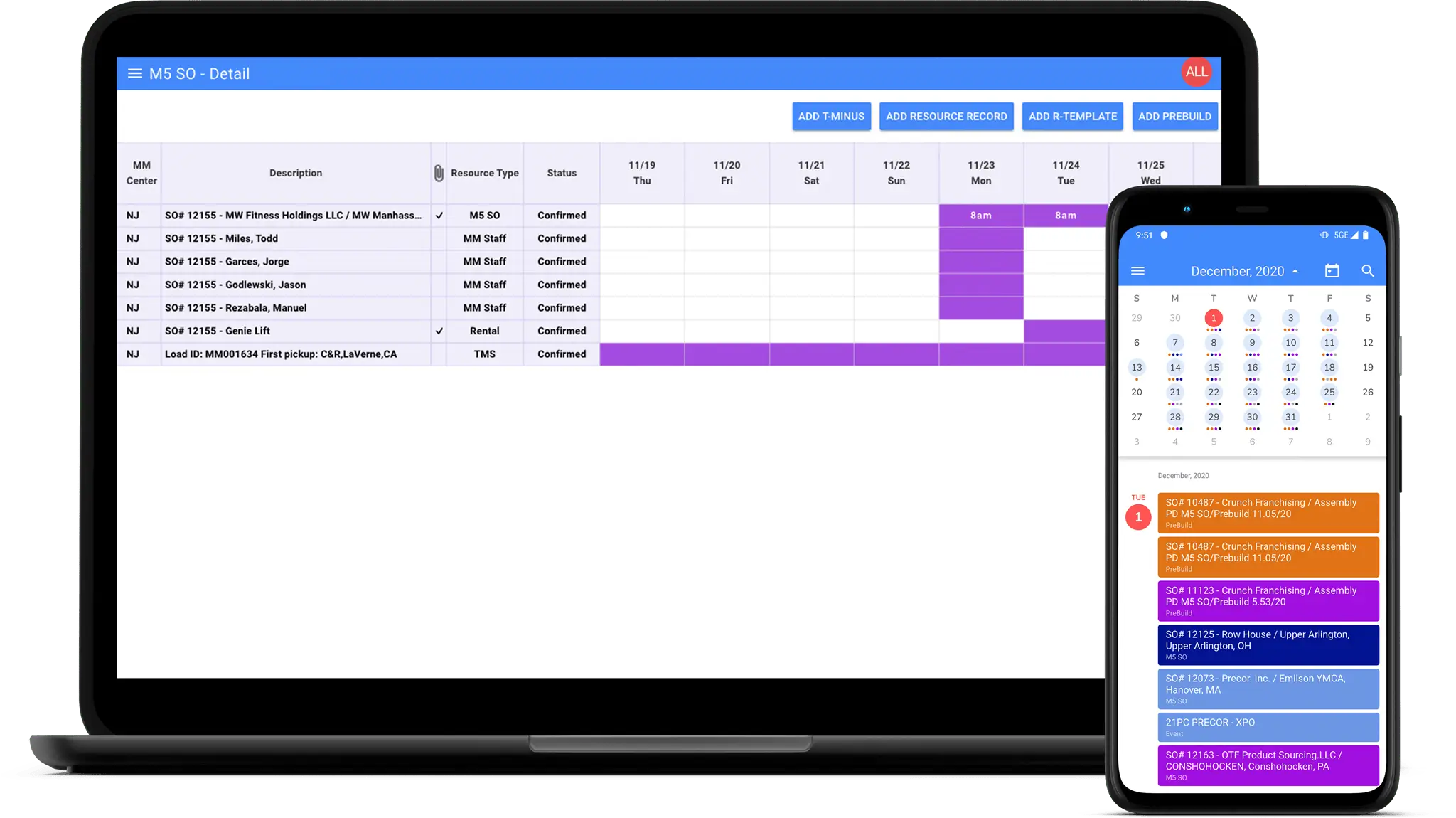
The fix is a reliable, time-stamped record of what happened, where, and on which order. In practice, that means electronic travelers and barcode or QR scanning of work orders. Simple operator terminals catch job starts, stops, counts, scrap, and downtime as they happen. You don’t need a finished ERP to begin, just consistent part and work-order numbers and an agreed list of downtime reasons. The result is data you build on rather than apologize for. That dependable event history is where digital transformation in manufacturing actually starts.
For a focused pilot on one line, expect 3 to 9 months to payback. Returns scale with how much manual entry and rework you cut. The common mistake is buying an analytics platform or an AI tool too early. Do that before you can capture the events they feed on, and you’ve paid to visualize data you can’t trust. This first step is where our business process automation work for manufacturers usually begins. It trades the paperwork and manual handoffs for a system built around how the plant runs.
Priority 2: Make Inventory Tell the Truth
You’re ready when these sound like a normal Tuesday:
- The system swears a part is in stock, and production can’t find it.
- Planners keep secret spreadsheets to correct the ERP.
- Buyers expedite parts that were supposedly on the shelf.
- A machine sits idle for one missing component.
- You carry extra safety stock just to sleep at night.
- “Checking inventory” means sending someone to go look.
The fix is to record material moves the way you already capture production events. Use barcode transactions for receiving and issuing. Track where work in progress actually sits. Control your bills of materials, and let reorder signals link purchasing to the floor. Wire it into the ERP you already run. Give planners a view of the exceptions instead of a reconciliation chore. But this rung of the manufacturing automation ladder needs production events from the Priority 1 phase and accurate item and location records first. Moving messy data into a shiny new system doesn’t clean it, only relocates it. Payback here runs roughly 9 to 18 months.
The wrong-order mistakes that stall a manufacturing digital transformation pile up at this rung:
- Replacing the whole ERP before you’ve mapped the workarounds your people live by
- Forcing a company-wide big-bang cutover instead of proving it on one product family
- Betting that software alone fixes weak discipline on the floor
This is exactly where generic products fail. When we worked with Mass Movement, off-the-shelf software didn’t match how the business ran. So we built the inventory system, resource planner, and mobile apps around their real workflows. Replacement isn’t always the move, either. For B-Orange, we extended an existing ERP with the pieces it was missing. That path is usually faster, cheaper, and far less disruptive than starting from scratch.
Priority 3: Tie Every Defect to Its Job
You’re ready when quality lives in the dark:
- Inspection results sit on paper or in a spreadsheet nobody else can open.
- A defect can’t be traced back to the job, material, machine, or shift that caused it.
- Defect reports go out by email and go quiet.
- Preparing for an audit takes days of searching through records.
- The same defects keep coming back, because the root cause never reaches the floor.
The fix is digital inspections and defect-tracking workflows. Each one links a quality event to the job, part, supplier, and machine behind it. Done right, a focused quality workflow pays back in about 6 to 12 months. Regulated shops feel the audit-time savings first. However, buying automated inspection or predictive-quality tools too early is a costly mistake. A model can’t learn to catch a defect your team describes five different ways. Connect quality to production first, and let the advanced tools come after.
Priority 4: Predict Failures on One Machine, Not Fifty
You’re ready when all three are true:
- A handful of critical machines cause most of your downtime.
- You’ve already got usable failure history to learn from.
- You can put a dollar figure on a surprise breakdown.
Predictive maintenance is the Industry 4.0 use case every vendor leads with. For the mid-market, though, the win comes from restraint. Start by scoring which assets actually hurt when they stop. Then watch that equipment, set alerts on the warning signs, and route them straight into maintenance work. Begin with one expensive, measurable failure, not the whole plant. Both the data and the payback hinge on asset criticality, so plan for a longer window of 12 to 24 months.
This is the rung that proves why sequencing matters. Put sensors on machines with no reliable identity or history, and you get one more pile of disconnected data, not a prediction. The related mistakes are all the same error in different clothes. You instrument every machine before ranking them, collect readings nobody acts on, or chase predictions on top of records you can’t trust.
Priority 5: Make the Systems Agree
You’re ready when your systems can’t agree:
- Production, ERP, quality, and maintenance data argue about the same facts.
- People key the same information into two or three systems a day.
- The plant dashboard and the finance report show different numbers for the same week.
- Every new connection is hand-built, and a second line can’t reuse a thing from the first.
The fix is to connect those systems through stable, reusable links instead of brittle one-offs. Underneath sits one decision: which system owns the truth for each kind of record. This is the long game, 18 to 36 months for broad integration. So structure it to pay off from each finished workflow along the way. Don’t make the business wait for the finished platform.
The classic blunder is wiring everything together without naming a single source of truth. Another is building a fancy digital model of the plant before you’ve captured data worth modeling. NIST makes the point plainly. The two hardest barriers for a small or mid-sized manufacturer are choosing the right analytics tools and connecting them to the data underneath. Such a plant can’t keep a data specialist on staff. That’s why digital transformation in manufacturing works as a sequence, with the foundation coming first.
Get Your Crew to Actually Use It
None of this survives contact with the floor if people won’t use it. Adoption is usually the line item nobody funds. A few things separate a workflow that sticks from one that gets quietly abandoned:
- Bring operators in before you lock the screens and scanning steps, because they know where the process bends.
- Design for gloves, noise, patchy signal, and shared terminals, not a tidy office desk.
- Kill the duplicate paper the moment a digital workflow proves itself, or your team will resent doing the job twice.
- Don’t punish anyone for the first ugly data that exposes long-standing problems, because catching them is the whole point.
- Prove one workflow before you take it plant-wide.
For the human side, our guide to change management for digital transformation covers the resistance patterns that quietly sink these projects.
Where AI Fits, and Where to Start This Week
In any digital transformation in manufacturing, AI is the next step, not the starting point. Once the earlier rungs are solid, the use cases are real. Think predictive quality, maintenance and demand forecasting, and a troubleshooting assistant that pulls answers from your own manuals and history. But here’s the short version: AI doesn’t remove the need to digitize production but rather raises the payoff for having done it right. A model can’t optimize a schedule on wrong machine availability, nor predict defects when one flaw is written up five ways. AI is an amplifier, and it makes weak data louder, not truer. When you’re ready to choose which parts of the business adopt AI first, our AI transformation strategy checklist applies the same logic.
So the first move isn’t a purchase order for AI. If you saw your plant in the Priority 1 symptoms, you already know what it is. Get reliable production data off the paper and into a system your team will use. That was the whole idea behind our smart-pricing work for KillerBee. We didn’t chase technology for its own sake. Instead, we went after one measurable bottleneck, quote generation, and cut it by 90%.
Redwerk builds this foundation for mid-market manufacturers one proven workflow at a time, then connects it upward toward an integrated, AI-ready setup. That work draws on our AI workforce transformation and manufacturing experience. To see which rung your factory is on and what to automate next, book a call with our team.
FAQ
How do you start digital transformation in manufacturing?
To start digital transformation in manufacturing, begin with one high-friction workflow and digitize the facts you need to run it. For most mid-market factories, that means retiring paper travelers and slow spreadsheet updates. Replace them with real-time data on work orders, output, scrap, and downtime. Set your baseline numbers, pilot on a single line, and scale only once the data proves reliable.
What should manufacturers automate first?
Automate shop-floor data capture first, almost every time. Inventory planning, quality, predictive maintenance, and AI all lean on accurate production events. None of them work without it. Regulated or maintenance-heavy plants have exceptions, but your first project should remove a manual bottleneck and create data the next step can use.
What is smart manufacturing for mid-market companies?
Smart manufacturing is the connected use of production, inventory, quality, and maintenance data to sharpen everyday decisions. For a mid-market company, it doesn’t mean a fully autonomous factory but a set of practical first steps. Those usually include digital work instructions, shop-floor data collection, clear material visibility, and links between the systems you already run.
How do you move a factory off spreadsheets?
List your spreadsheets and sort them by job. Replace the ones acting as unofficial systems of record or approval steps first. Move the underlying production and inventory events into proper applications. Connect them to your existing systems and give each one a clear owner. Retire every duplicate sheet as its replacement proves dependable.
How much does manufacturing digital transformation cost?
There’s no single number, and anyone who quotes one without questions is guessing. It depends on how many plants, lines, machines, integrations, and legacy systems you run. Your regulatory load matters too. The smart move is to start with one bounded workflow that has measurable baseline costs. Prove the value, then use that result to scope the wider rollout.
See how our custom ERP tools helped Mass Movement reach $2.74B in revenue growth