Your fine-tuned model is only as strong as the decisions behind it
Customizing a model comes with hidden challenges:
- knowing whether you should fine-tune at all instead of improving your prompts or adding retrieval
- building a dataset that is clean and balanced enough to learn from
- and keeping the model from losing its general ability while it picks up your narrow skill.
Professional LLM fine-tuning services must go beyond a basic training run. Redwerk helps you choose the best approach, prepare a balanced dataset, and protect the model’s core abilities. We also test its performance on new data, verify licensing, and deploy a model built for real-world traffic.
As your LLM fine-tuning company, we handle the heavy lifting. You get a reliable model that keeps its general strengths, masters your specific tasks, and delivers proven results.
Fine-Tuning vs RAG vs Model Distillation: Which One Do You Need?
LLM Fine-Tuning Services Built Around Your Goals
Fine-Tuning Readiness Audit
We test whether fine-tuning is even the right move. In LLM development, better prompting or retrieval often solves the problem at a fraction of the cost. You get a clear recommendation before you spend on training.
Instruction & Supervised Fine-Tuning
We train your model on input-output examples so it follows instructions and produces the exact format you need, whether that is structured JSON, a support reply, or a classification label.
Preference Alignment
When good output is subjective, we tune the model on human preferences. This shapes helpfulness, tone, and policy compliance in cases that are hard to capture with fixed labels alone.
Domain Adaptation
We further train the model on your specialized corpus so it understands the terminology and concepts of your field, reducing the prompt effort needed for every request.
Parameter-Efficient Fine-Tuning
We use adapter-based methods that update only a fraction of the model’s parameters. You get most of the quality of full fine-tuning at a much lower cost in compute, memory, and time.
Model Distillation
We use model distillation to shrink a large or fine-tuned model into a cheaper one that serves predictions faster, so you keep most of the quality while cutting your inference bill.
Selected Cases
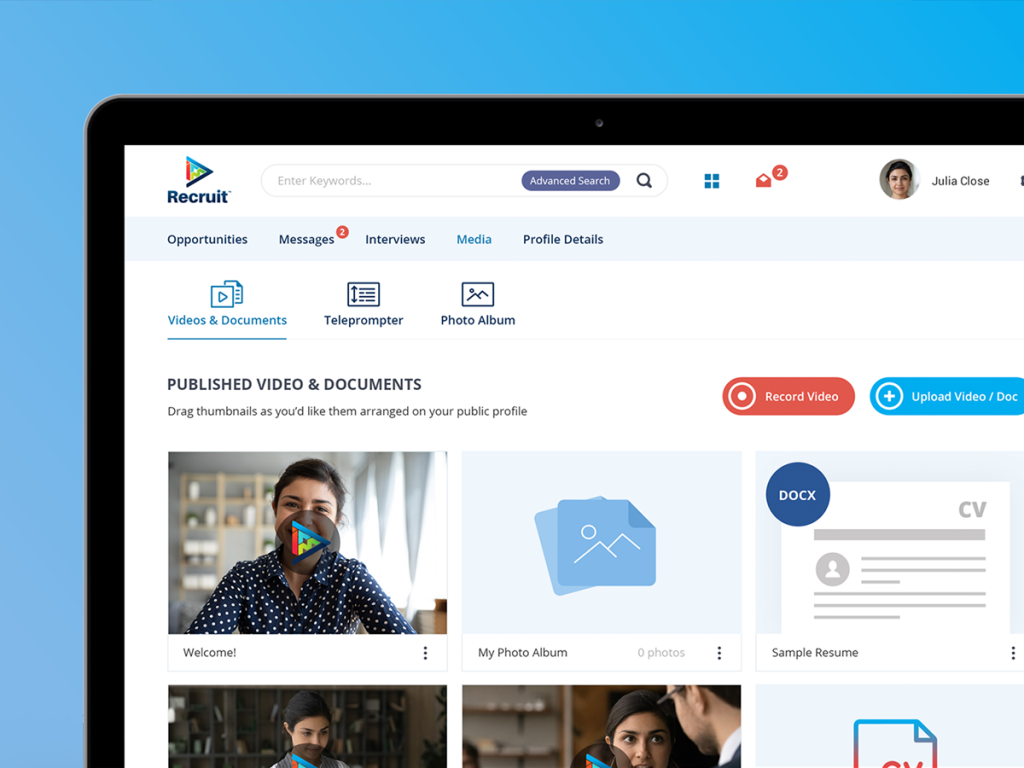
Recruit Media
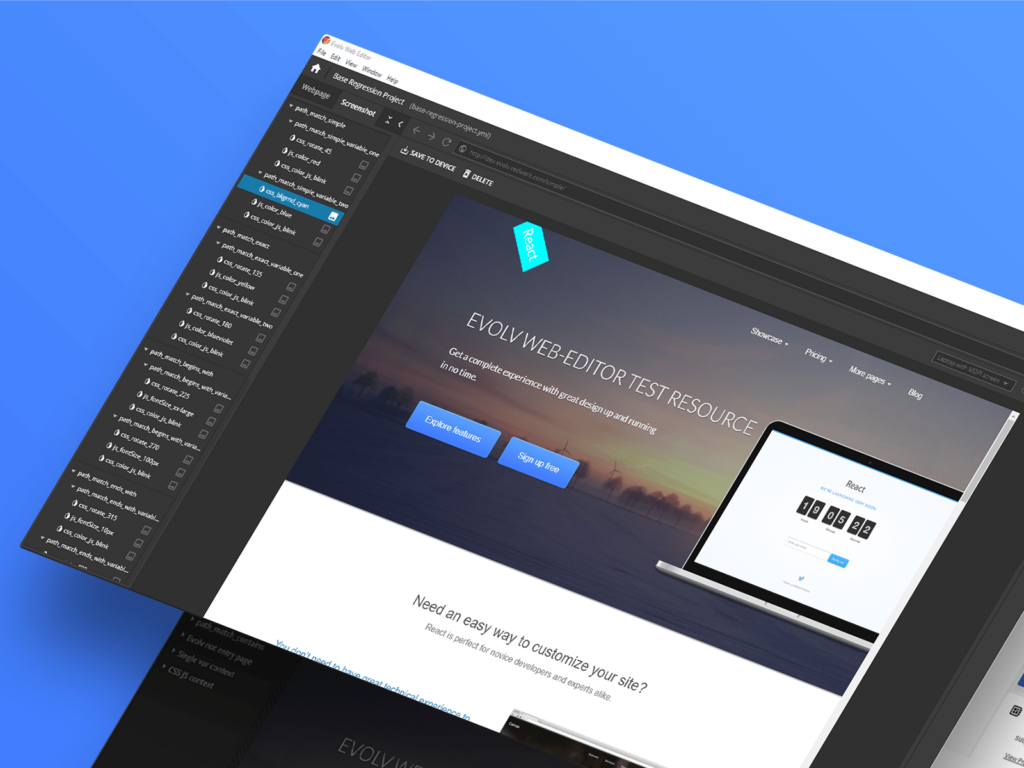
Evolv
Looking to turn generic AI into your competitive advantage?
Let's TalkOur LLM Fine-Tuning Workflow
1. Discovery Phase
We start by defining your exact use case, baselining prompts, and evaluating whether fine-tuning, RAG, or distillation is the best technical and financial fit.
2. Data Engineering & Curation
Bad data breaks models. We extract, clean, label, and format your enterprise data into high-quality training, validation, and test sets, ensuring strict train-test separation.
3. Method & Infrastructure Selection
We match the right technique (SFT, LoRA, DPO) to the right framework and secure compute environment, expertly balancing cost, data privacy, and training speed.
4. Model Training & Iteration
Our AI engineers run the training jobs, actively monitoring loss curves, optimizing hyperparameters, and creating epoch checkpoints to prevent overfitting and catastrophic forgetting.
5. Rigorous Evaluation
We benchmark the tuned model against holdout datasets, run extensive regression tests, and evaluate for factual accuracy, safety, and strict format compliance.
6. Deployment & Monitoring
We securely deploy your fine-tuned model to production via optimized endpoints, setting up ongoing observability for cost, latency, and quality drift to ensure long-term stability.
Why Teams Trust Redwerk
 Right-Fit AI Strategy
We begin by testing simpler alternatives. Better prompts, in-context examples, RAG, workflow changes, or a smaller conventional model may solve the problem without fine-tuning. You receive a recommendation tied to evidence, cost, and business value.
 End-to-End AI Expertise
Fine-tuning is not just an AI engineering task. Our delivery team brings together AI engineers, data specialists, software developers, QA engineers, DevOps professionals, designers, and product-focused project managers.
 Senior Engineering Talent
Redwerk works with experienced engineers who can reason about architecture, data quality, evaluation, security, and production constraints, not simply run a training script. We employ more than 90 tenured team members.
 Evaluation Before Deployment
We define the benchmark before training begins. The tuned model must outperform the baseline on held-out, task-relevant examples without introducing unacceptable regressions in safety, general ability, latency, or cost.
 Production Cost Control
A model is not successful if it performs well in a notebook but is too slow or expensive for real users. We assess training resources, endpoint architecture, batching, autoscaling, quantization, model size, and expected inference volume.
 Global Enterprise Trust
Our software quality is recognized internationally, earning us a spot on IAOP’s Global Outsourcing 100 list. From Fortune 500 giants to nimble startups that get acquired by market leaders, businesses worldwide trust our engineering expertise.
We turned to Redwerk because we did not have the resources or the expertise in-house to build a cloud-based product. They're incredibly professional, responsive, and highly communicative. We launched the product last year, and we're still doing business with them. I'd recommend them in a heartbeat.

I've just been so unbelievably impressed with Redwerk’s ability to kind of run the gamut in terms of specialty. They have incredible coders, they have incredible project managers, and they have the ability to make this really seamless experience of creating an app.
There's a real commitment to get the task done in a timeframe that is expected. The quality of the work is very high. I would certainly recommend working with Redwerk's team.
Technologies We Use
Models and AI Platforms
Training and Alignment
Evaluation and Experiment Tracking
Services Beyond LLM Fine-Tuning
AI Automation
We automate repetitive workflows like document handling, support, reporting, and approvals. To ensure reliable daily operations, we combine LLMs, business rules, system integrations, and human oversight.
AI Agent Development
We design task-focused AI agents with controlled tool access, memory, permissions, validation, and monitoring, helping businesses automate multi-step workflows without giving models unsafe or unrestricted authority.
API Development
We develop secure APIs that connect tuned models with your products, databases, internal systems, and third-party services while enforcing validation, permissions, rate limits, logging, and version control.
Cloud App Development
We design and build scalable cloud applications around your AI models, including APIs, authentication, queues, storage, monitoring, autoscaling, failover, cost controls, and secure deployment pipelines.
FAQ
1. When should we fine-tune an LLM?
Fine-tuning makes sense when you need consistent behavior, domain language, structured outputs, or better performance on a specific task. For frequently changing knowledge, RAG may be a better fit.
2. How much data do I need to fine-tune a model?
Less than most people expect. A model can often be fine-tuned on a few hundred to a few thousand task-specific examples, because it builds on what the base model already knows. What matters far more than volume is quality, so we focus on clean, consistent, well-balanced examples.
3. Will fine-tuning make the model worse at general tasks?
It can, if it’s done carelessly — a problem called catastrophic forgetting, where the model gains your narrow skill but loses its broader ability. We guard against it with the right method, careful data balance, and held-out evaluations that check general performance alongside your task before anything ships.
4. How do you prove the fine-tuned model is actually better?
We measure it against a held-out test set and your real task, not just the training score. You get a clear before-and-after report comparing the tuned model to the base model, plus regression tests you can keep using to catch any quality drop later.
5. Who owns the fine-tuned model and the data it’s trained on?
You do. We also check that your chosen base model and training data permit your intended commercial use, so you avoid licensing surprises down the line. Specific ownership and handoff terms are set out clearly in the engagement before work begins.
Related in Our Blog
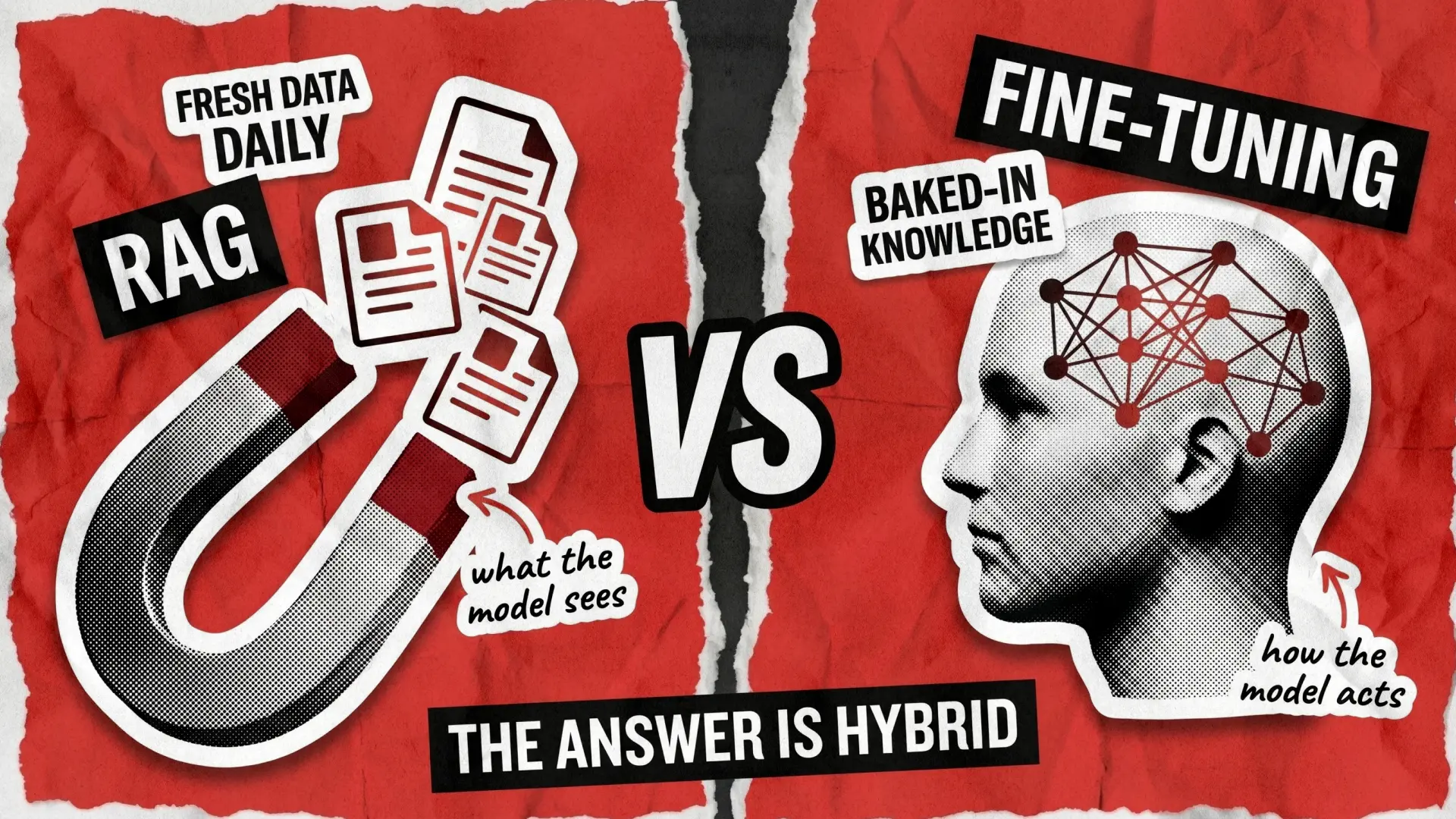
Fine-Tuning vs RAG: A Decision Framework
7 Best LLM Frameworks in 2026: Which to Use in Any Situation
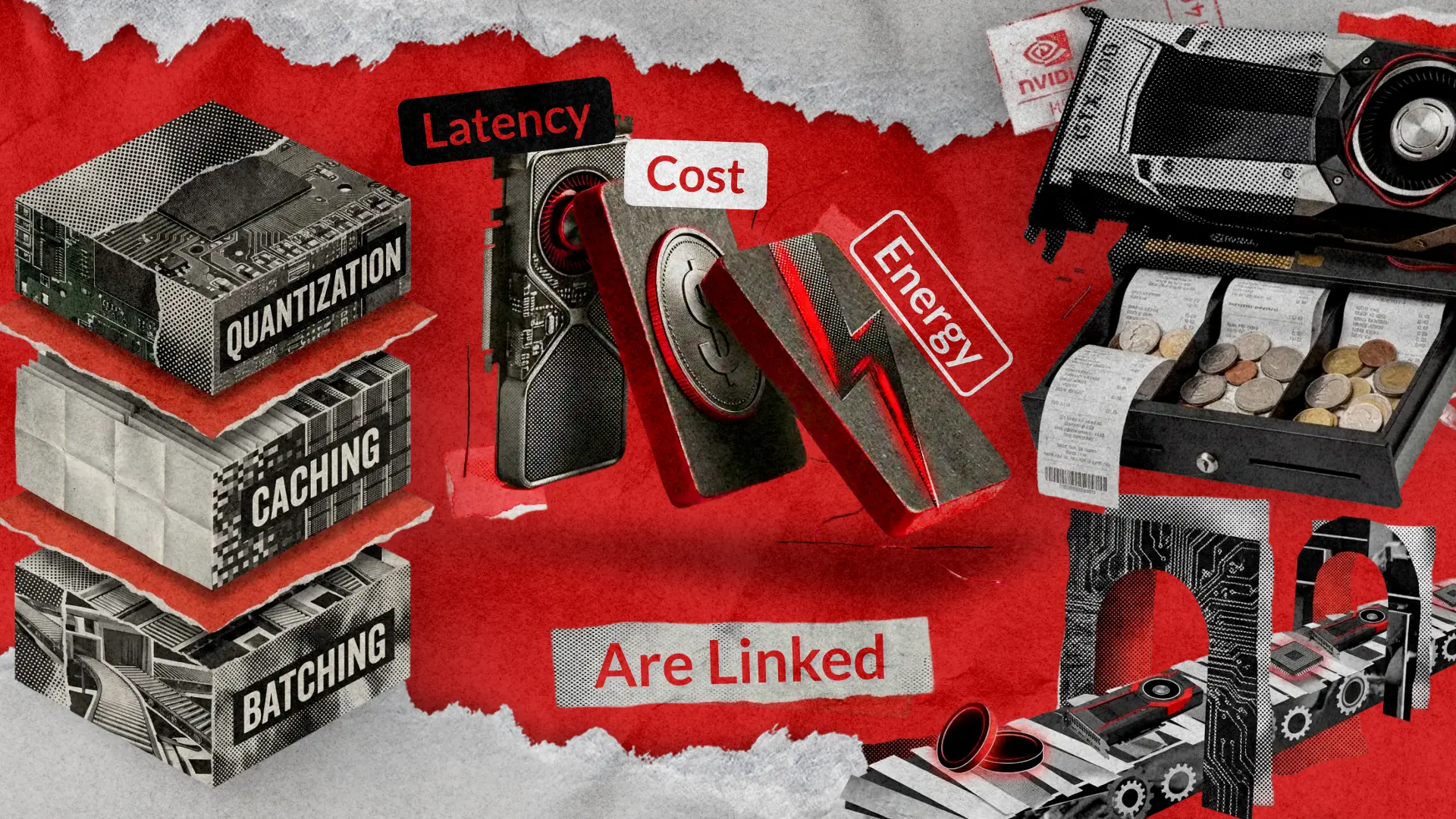
Mastering LLM Inference Optimization Techniques for Real-World Workloads
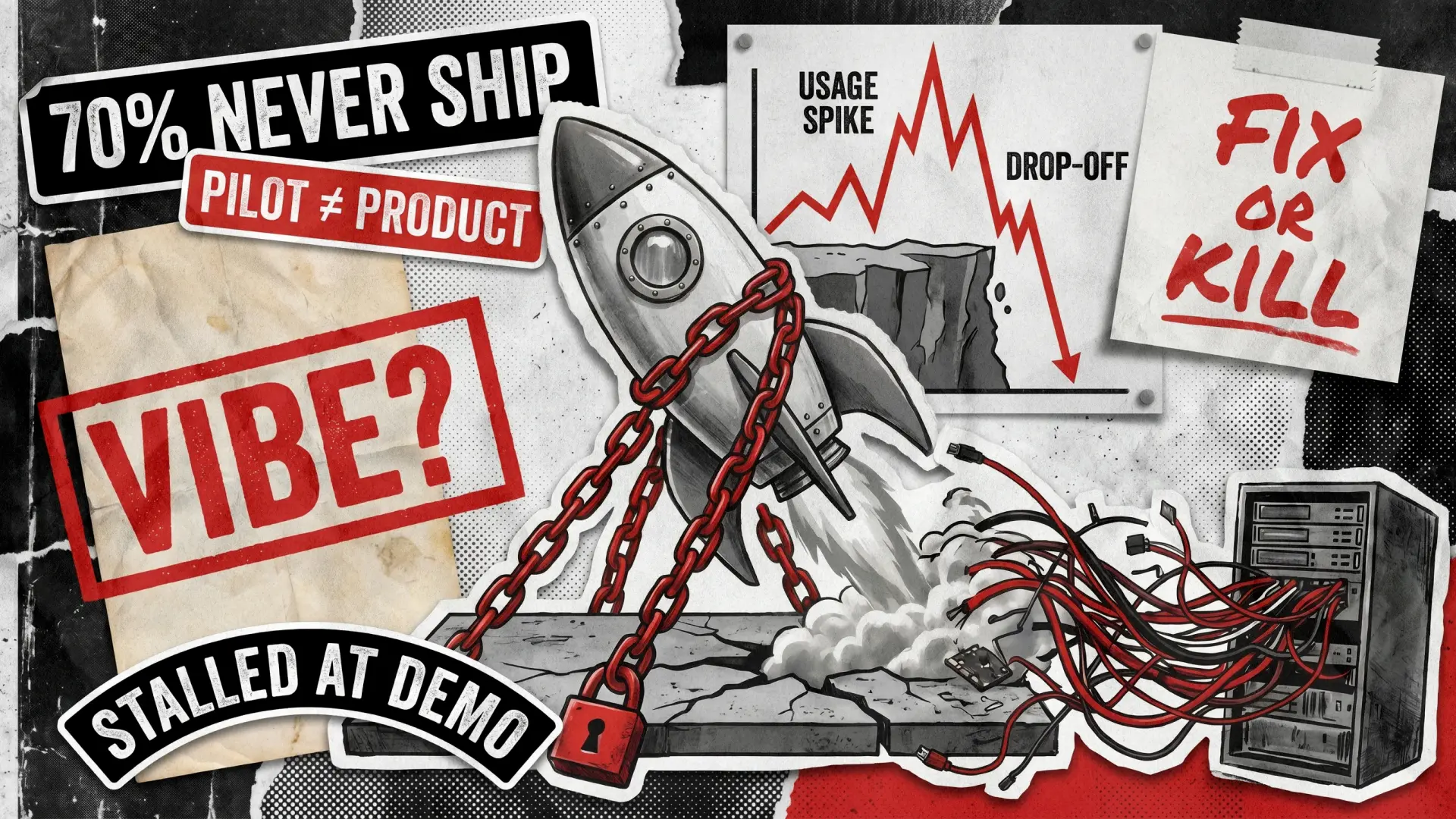
AI Implementation Consulting: Why 70% of LLM Rollouts Stall at Pilot and How to Cross the Gap
Need a model that understands your domain?
Tell us about your use case and data, and we'll map the best path to production.
250+
SUCCESSFULPROJECTS
DELIVERED
90+
AI & ENGINEERING PROFESSIONALS21
YEARS INOPERATION
65%
COLLABORATIONS THATBECAME LONG-TERM