Vibe coding promised the dream: describe your app in plain English, watch AI build it, ship it to the App Store, and enjoy passive income from your growing business. However, it turns out that Apple didn’t get the memo.
In March 2026, Apple quietly blocked updates for two of the most popular AI app builders, Replit (valued at $9 billion) and Vibecode, from publishing new versions on the App Store. No announcement, no warning, just quiet ghosting. If your iOS project was built on one of these tools and is now stuck, we can suggest how to solve the problem with vibe code cleanup. However, first, let’s understand what you’re actually up against.
In this post, Redwerk’s experts in software engineering and business analytics will talk about what happened and what it means if you were betting on vibe coding to get your product to market.
What Did Apple Actually Do to Vibe Coding Apps?
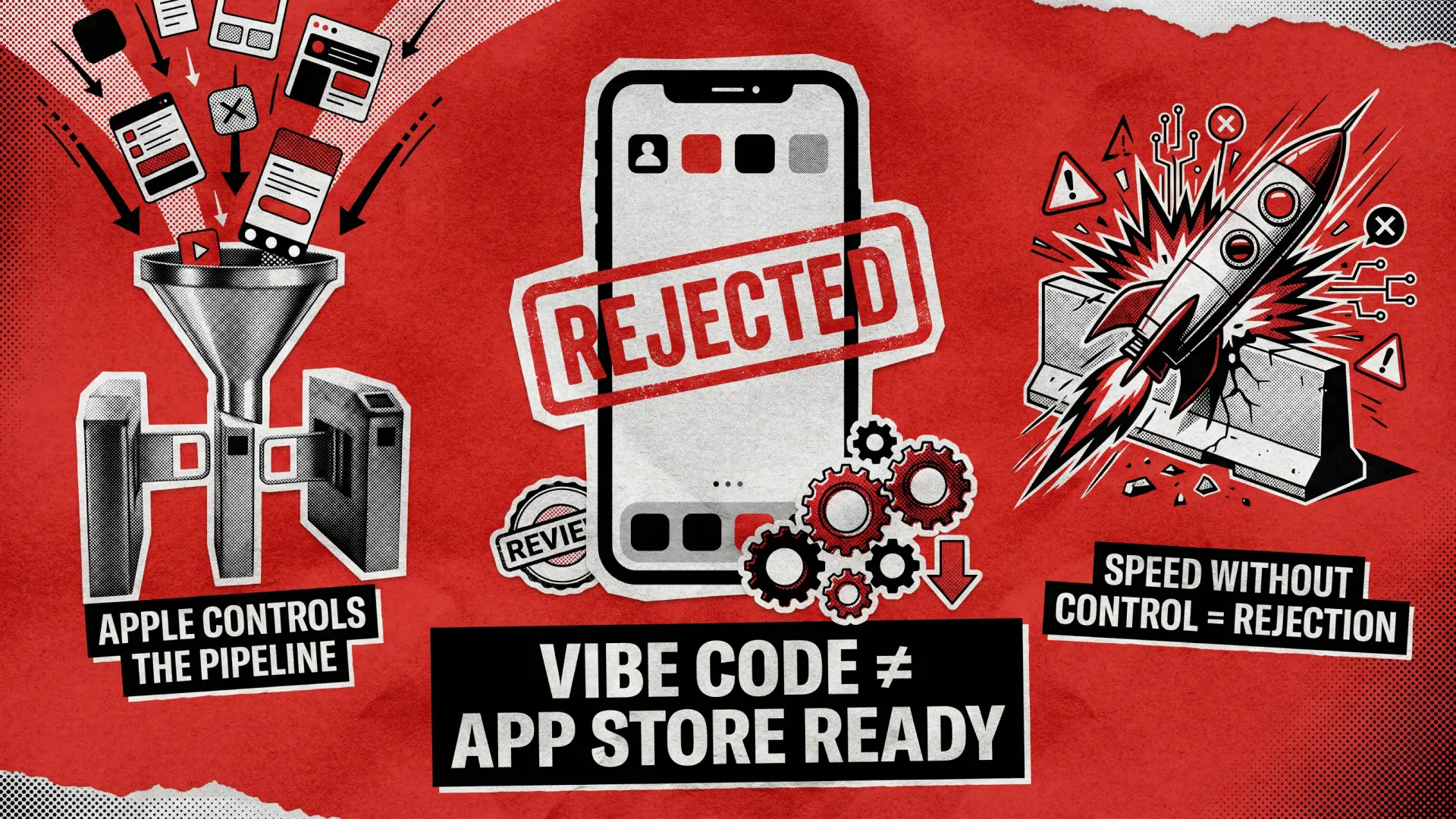
Apple didn’t ban vibe coding outright, but it enforced a rule that’s been in its guidelines since the App Store launched Guideline 2.5.2. The rule says that apps must be self-contained. Therefore, they can’t download, install, or execute code that changes their own functionality or the functionality of other apps.
However, vibe coding tools like Replit do exactly that: they change the code. When you generate an app inside Replit, the result runs as a live preview within the original app via an embedded web view. To Apple’s review team, that looks like an app that becomes a different app on the fly. Apple confirmed that the enforcement applies to any app that runs code that alters its own functionality, not specifically to vibe coding as a category. The distinction matters less than you’d think when your update is still stuck in review.
Replit’s iOS app has already felt the impact. It dropped from #1 to #3 in Apple’s free developer tools rankings since its last update in January, partly because it couldn’t ship new features or bug fixes while the dispute was unresolved.
Why Is Apple Blocking Vibe Coding Apps?
Apple’s official line is safety and ecosystem integrity. However, the real picture runs deeper.
According to The Information, vibe coding apps threaten Apple’s business on three distinct fronts, and understanding all three explains why this crackdown was inevitable.
- Platform Control
Apple’s entire model depends on centralized distribution and predictable app behavior. Every app in the App Store has been reviewed, sandboxed, and approved. Vibe coding tools blur the line between tool and platform — they let users spin up entirely new software experiences inside an existing app, bypassing the review pipeline that Apple treats as non-negotiable. - Revenue Protection
Apple collects a 30% commission on App Store purchases. Vibe coding tools let users build and distribute web apps directly on their devices, meaning that apps never touch the App Store or Apple’s cut. That’s not a theoretical risk but a structural bypass of Apple’s primary monetization mechanism. - Safety and Liability
Apple has long positioned App Store review as a security layer for users. AI-generated apps without human review introduce unpredictable behavior, unvetted third-party integrations, and content that hasn’t been moderated. Apple carries legal exposure for anything running on its platform — and that exposure grows when the code was written by an AI model that nobody manually checked.
But here’s the irony: Apple itself integrated AI coding agents from OpenAI and Anthropic into Xcode this year. They’re not against AI-assisted development as long as it happens within their ecosystem, on their terms, and is subject to their review process. One competition attorney told The Information that Apple has a documented history of blocking apps that compete with it on its own platform. Xcode doesn’t bypass App Store review, but Replit does. That’s the line.
Are Vibe-Coded Apps a Security Risk?
There’s an important matter that gets less attention than the Apple dispute: vibe-coded apps have a serious security problem independent of any App Store policy.
Research published in January 2026 found that applications built using AI agents are likely to contain basic logic errors and security vulnerabilities. Three test apps built from the same detailed prompt all exhibited flaws that a standard code review would catch immediately. Speed is what vibe coding optimizes for, but it’s pretty much blind to security.
For a prototype or internal tool, that tradeoff is acceptable. However, for an iOS app handling real user data, such as payments, health records, and authentication, it isn’t. A professional code review before App Store submission is no longer optional at that point. This service makes the difference between shipping and getting rejected on security grounds, or worse, shipping something that becomes a liability after launch.
What Does Apple Want Vibe Coding Apps to Change?
Apple offered a path forward for both companies, but the compromises aren’t painless. Replit would need to open generated app previews in an external browser rather than showing them within the app. That means your user builds something, then has to switch between two apps to see it working. The result is not exactly the seamless experience that made vibe coding attractive in the first place.
Vibecode would need to remove the ability to create apps specifically for Apple devices altogether. So, it’ll become an app builder that can’t build Apple apps offered on the App Store. Sounds fishy, right?
Neither option kills vibe coding entirely, but both chip away at what made these tools compelling. Developers are adapting, but the most realistic path forward appears to be hybrid apps that combine AI-generated components with traditionally structured code. Another option is moving certain features to web apps that never need App Store approval. However, that’s a different product from what most founders started building.
What Happens If You Built an iOS App With Vibe Coding?
Let’s be direct. If you used a tool like Replit or Vibecode to build an iOS app, you’re facing one of three scenarios:
- Scenario 1
Your app is already on the App Store and works. Apple isn’t pulling existing apps for now. However, if your tool can’t push updates, your app is frozen in time, bugs and all. Indie developers and AI-first startups are feeling this hardest. They moved fast with these tools precisely because they didn’t have the resources for a full dev team. - Scenario 2
Your vibe-coded app got rejected from the App Store. You’re staring at an appeal process with guidelines that weren’t designed for AI-generated code. Developers have widely criticized the lack of transparent guidance. Rejections come citing Guideline 2.5.2 without clear direction on what “compliant” actually looks like for their specific product. - Scenario 3
You were mid-build when this hit. So now you have a half-finished product, a deadline, and a tool that can no longer reliably deliver on its iOS promises.
In all three cases, the underlying problem is the same: vibe coding gave you speed, but not the structural compliance that App Store submission requires. Those are two different destinations, and the gap between them is where projects stall.
Can Vibe Coding Apps Pass App Store Review?
Yes, they can, but with significant constraints. Apple’s guidelines carve out an exception for educational apps that let students test executable code. Therefore, some tools, like Vercel’s v0, have continued publishing updates without issue. The difference comes down to architecture:
- How the generated code runs
- Where it runs
- Whether it modifies the host app’s behavior
Vibe-coded apps that generate web apps rather than native iOS apps and display them in an external browser instead of an in-app web view are more likely to make it through. However, that’s a narrower use case than most founders had in mind when they started building.
Meanwhile, anything that touches native iOS functionality, runs in-app previews, or was specifically built to create Apple-platform software faces the review risk, and the path forward isn’t clear without professional developer intervention.
Is Vibe Coding Enough for a Serious iOS Product?
Vibe coding is genuinely impressive for prototyping. If you use it to validate a concept, build an internal tool, or test a UI flow, it earns its hype. About 47% of developers now use natural-language prompts to generate non-trivial code at least weekly. If you want to see what the category can actually deliver, here’s a breakdown of real vibe-coded apps worth studying.
However, “impressive prototype” and “App Store-ready iOS product” are not the same destination. App Store submission requires clean architecture, no self-modifying code, compliance with Apple’s Human Interface Guidelines, and a review process that’s tightening its scrutiny of AI-generated code. Vibe coding tools weren’t engineered around those requirements. They were engineered around speed.
The moment your product needs to scale, handle real user data, pass App Store review, or integrate with native iOS capabilities, you’re in a territory where custom iOS app development is not the slow option. It’s the only route to a successful product launch.
The broader pattern is clear: Apple accepts AI, but only within strict limits. Obviously, more open ecosystems like Android and the web give AI-generated apps more room to operate.
However, the wall was always there for iOS, vibe coding just ran into it in public.
Your Vibe-Coded App Got Rejected. Now What?
This is where we come in.
Redwerk has been building iOS apps since 2009, long before AI could write a line of code, and now alongside it. We know App Store Guideline 2.5.2, the way you know your product roadmap. We’ve shipped native iOS apps for clients across North America, Europe, and Australia, including projects that started as AI-generated prototypes and needed a real engineering team to cross the finish line. Our AI development services are built for production-grade output, not demos.
So, if your vibe-coded iOS project hit a wall, got rejected, or froze, we’ll tell you exactly what it needs and build it right. No fluff, no “let’s see what happens.” Just a clear plan and a team that’s done it before.
Your app isn’t dead. It just needs the right hands. Tell us what happened, and we’ll take it from here!
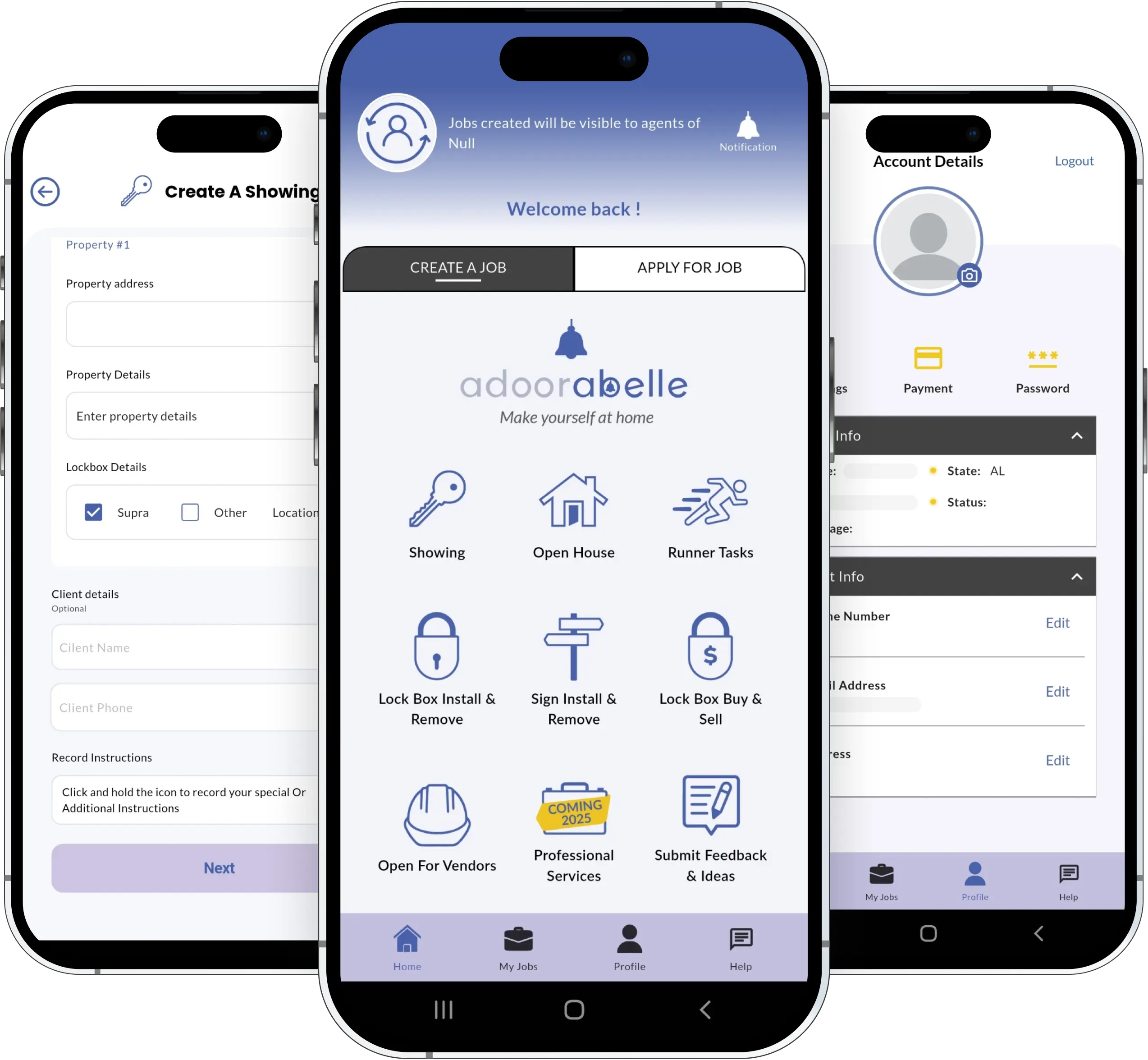
See how we helped a real estate app achieve App Store compliance by uncovering 80+ functional and security risks