The Good Part
 The Good Part
Olching, Germany




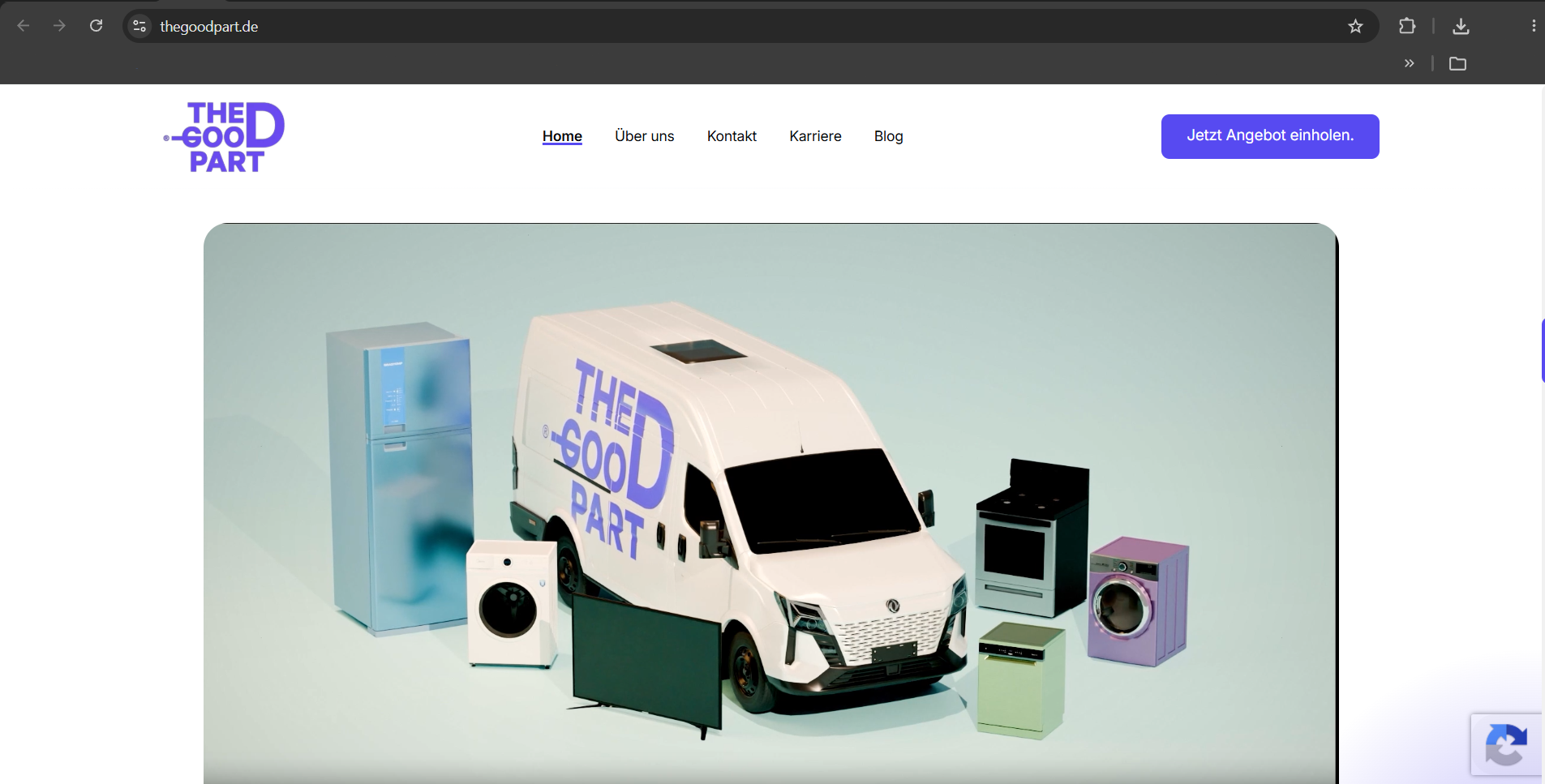
The Good Part GmbH delivers, installs, and disposes of large household appliances across Germany. They’re the last-mile partner for kitchen studios, retailers, and e-commerce businesses that deliver and install appliances fast.
All CustomersWeb Development
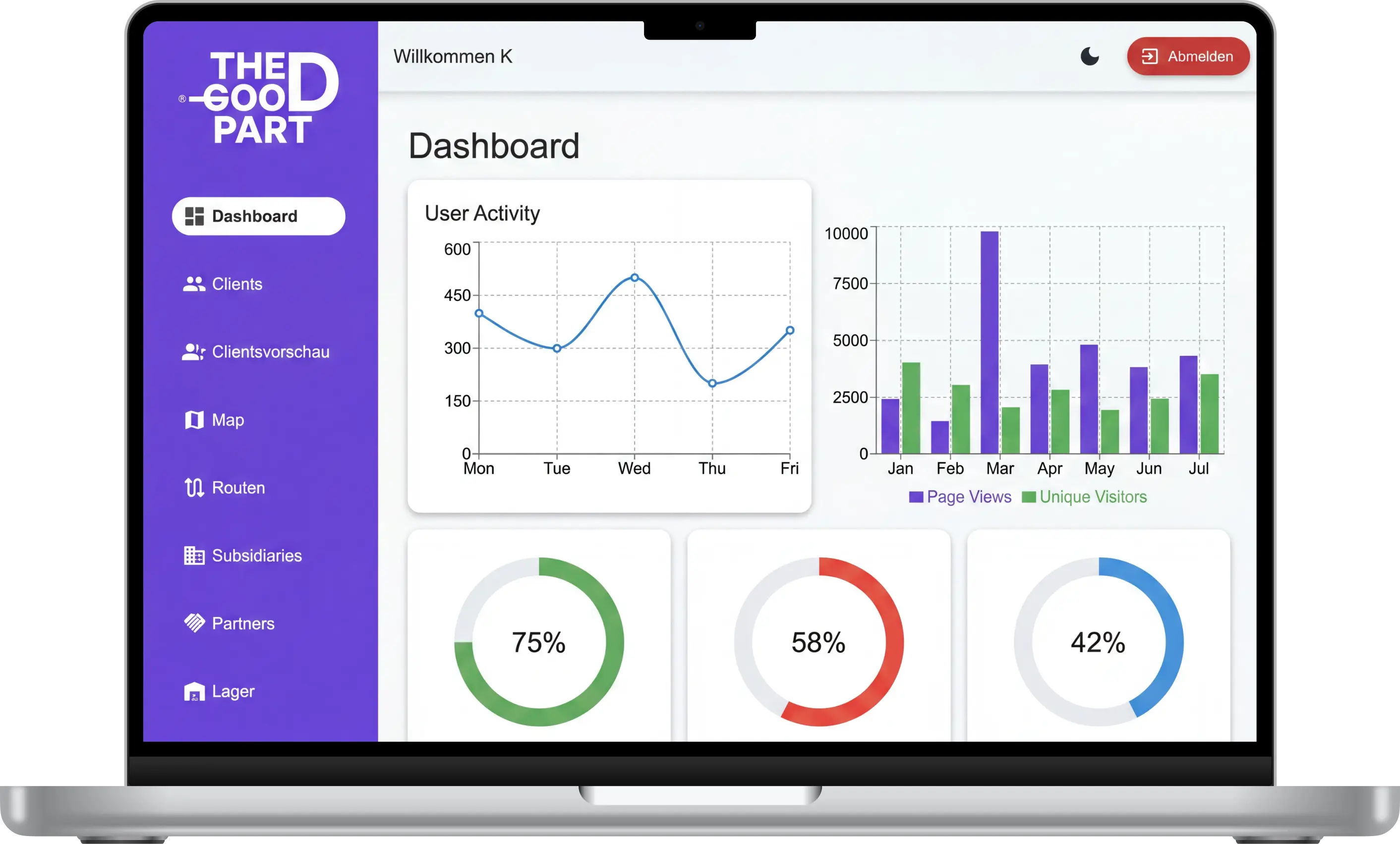
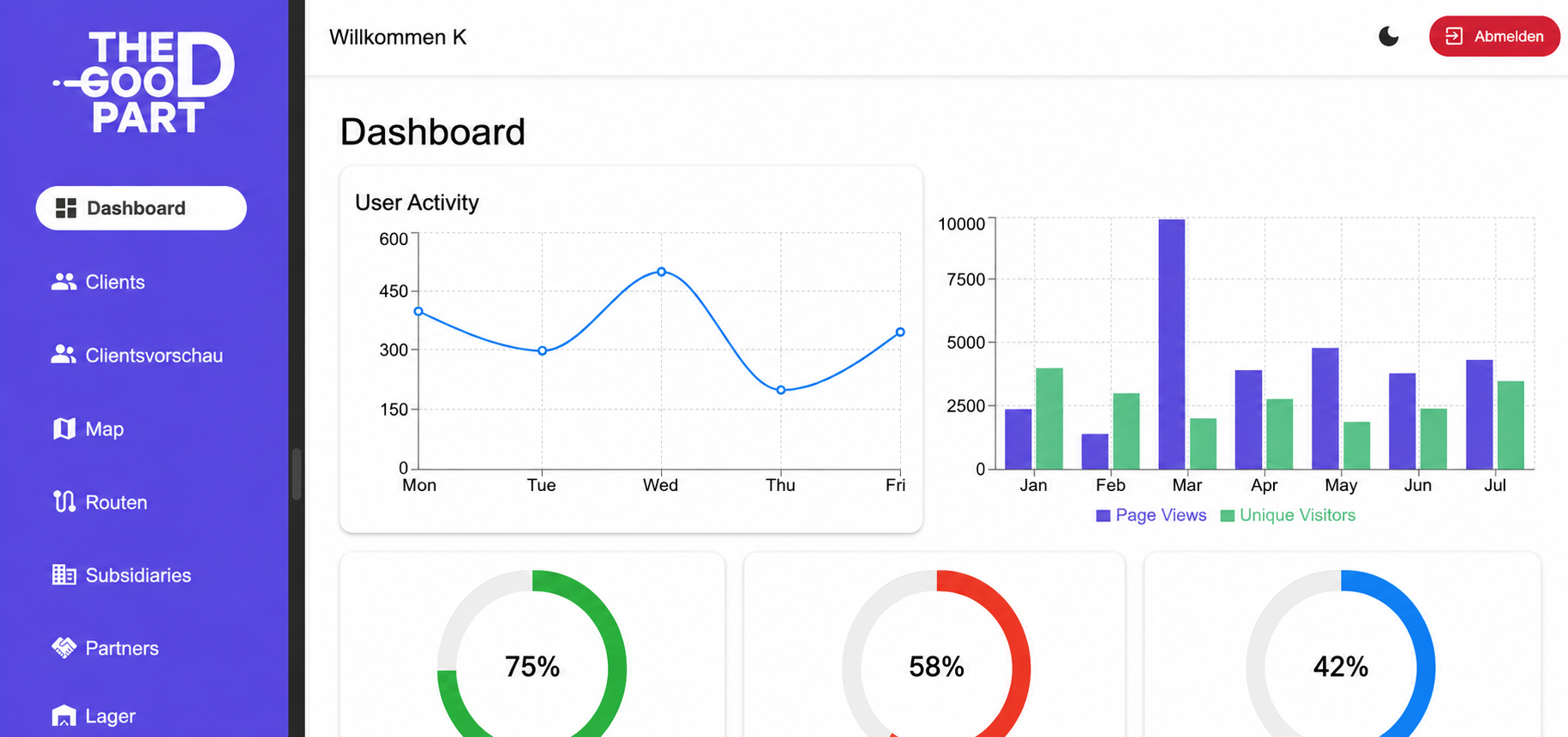
We strengthened the backend of The Good Part’s internal order management system, layering in automation, validation, and clearer data structures. Redwerk improved data integrity, dispatch efficiency, and order tracking for last-mile appliance delivery.
Learn moreLogistics
The Good Part runs a tight last-mile operation, and every minute of dispatch delay or duplicated record costs them. We tuned the system to match how their warehouses, drivers, and subsidiaries actually work together.
Learn moreIntroduction
In appliance delivery, success isn’t something the customer notices, but rather the absence of failure. A duplicate record, a misassigned driver, a timestamp out of sync with reality: each one is a missed window or a second trip out. The Good Part’s operations had outgrown their backend, and the cracks were starting to show. Over the course of this software development project, we delivered:
- Back-end development in Java 17
- Database modeling in PostgreSQL
- Test-driven development in a Dockerized environment
- API development and deployment integration
Challenge
The Good Part came to Redwerk with a backend that had quietly fallen behind their operations. As order volume grew, minor frictions in the internal system became daily slowdowns for dispatchers, warehouse staff, and managers.
Duplicate client records had been piling up, creating inconsistencies across orders and forcing the team to clean things up by hand. Dispatchers couldn’t see in real time which drivers were already occupied, which made route planning slower and less accurate. Warehouses and subsidiaries weren’t formally linked in the data model, so logistics coordination relied on memory and side-channel communication.
On top of that, timestamps weren’t always accurate, order statuses had to be flipped manually after deliveries, and there was no clean way to validate or preview an order before pushing it through the system. Each of these issues was small on its own. However, together they meant more manual work, slower turnaround, and less trust in the data. The team needed a focused engagement to fix the highest-impact pain points quickly without rebuilding the whole system or disrupting day-to-day operations.
Solution
We took on a tight, targeted scope and delivered seven backend improvements on a tight schedule. The codebase is written in Java 17, with a functional style built around the Stream API. Our development team matched that, no exceptions, so the new code reads like the rest of the system instead of standing out as someone else’s.
Every feature shipped with its own unit and integration tests to uphold the client’s high Test-Driven Development standards. Tests run inside a Docker environment that spins up a real PostgreSQL instance, so we’re validating against the actual database engine the system runs on, not a mock. Deployments go out through a GitHub Actions Build–Push–Deploy pipeline, with staging and live as separate targets, which keeps releases fast and predictable.
Here’s what we delivered:
- Duplicate client management: Built automatic detection of duplicate client records, clear labeling in the UI, and a resolution workflow that lets staff merge or dismiss duplicates in a few clicks. No more weekly clean-up batches.
- Warehouse management: Introduced a proper warehouse entity and modeled the relationships between warehouses and subsidiaries, so logistics coordination has a real structure behind it rather than relying on tribal knowledge.
- Driver availability for dispatch: Added real-time indicators showing which drivers are already occupied during route planning. Dispatchers can now build routes without flipping back and forth between screens or having to guess.
- Order lifecycle automation: Completed deliveries now update their status automatically, removing a manual step that previously bottlenecked end-of-day reporting.
- Timestamp accuracy fixes: Hunted down and fixed the timestamp bugs that were making order tracking unreliable.
- Preview Orders API endpoint: Added a backend endpoint that lets the team review and validate order data before it’s committed, so errors get caught before they become customer-facing problems.
- Code integration and pull request support: Worked inside the client’s existing repo and review process, so every change was merged cleanly without extra integration overhead on their side.
All features shipped fully tested and slotted into the running system.
Result
The Good Part now runs on a backend that does most of the work for them. In practice, this looks like this:
- Duplicate records get caught and resolved before they cause errors.
- Dispatchers see driver availability at a glance and plan routes faster.
- Warehouses and subsidiaries are properly linked in the data model. Order statuses update themselves.
- Timestamps can be trusted again.
- New orders can be previewed and validated before they’re committed.
The ultimate result we helped the client achieve boils down to less manual work and fewer data errors, leading to faster dispatch.
Need a focused backend engagement that ships in days, not quarters?
Let’s talkTechnologies
 Java 17
 Stream API
 PostgreSQL
 GitHub Actions
 Linear
 Flyway
 Lombok
 Testcontainers
 MockServer
 AWS Textract/S3
 Mistral AI
 Twilio
 Jakarta Mail
 Logistics1
Redwerk Team Comment

Oleh
Developer
The project was a challenge because of the tight scope and even tighter timeline. However, we made it work. Functional Java keeps the code clean to read, and running every test against a real Postgres in Docker means we trust what we ship. In a very short time, we delivered updates that merged smoothly and boosted the system’s overall performance with enhanced features.

Related in Blog

JavaScript Code Review Checklist: All Steps Included
We all strive to build high-quality, performant, and secure software. Whether you're gearing up for a crucial investment round or aiming to accelerate your development cycle, a robust codebase is an absolute must-have. But how can you ensure that your team is consistently deliver...
Read More
Budget Planning for Software Projects: What to Consider
Afraid your project will fail due to the pitfall of overbudgeting? It's an entirely legitimate fear, seeing as Statista found that 47% of enterprise resource planning projects exceed their budgets....
Read More
How Custom Software Development Streamlines Automotive Supply Chain Management
Have you ever thought of the automotive industry's supply chain management as a high-performance engine in the vehicle of the auto business? Meaning, it’s a core component that drives you to success at breakneck speeds....
Read More
SDLC Best Practices: How to Ensure Security in Each Phase
Equifax. SolarWinds. Yahoo. MOVEit. These aren’t companies that got hacked by some sci-fi superweapon. They got breached because of preventable, well-documented gaps in how their software was built, tested, and maintained....
Read MoreImpressed?
Hire usOther Case Studies
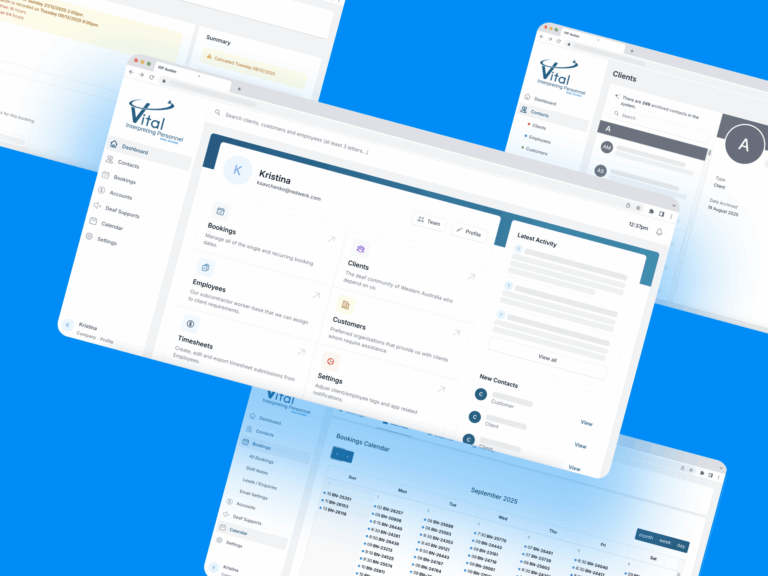
VIP Auslan
Reduced manual admin tasks by 40% for a booking platform trusted by 100+ Australian government institutions
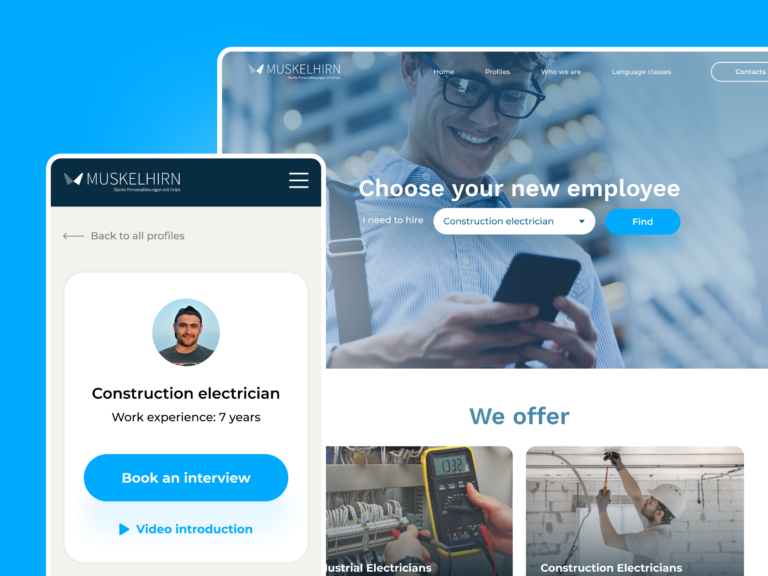
Muskelhirn
Helped digitalize recruitment services and slash business operations time in half