Your team has an Android app to ship or a Java backend that has to survive another decade, and someone has to decide which language the next five years of code get written in. Kotlin vs Java is close to settled for new Android work and genuinely open on the backend. Kotlin is Google’s default for Android and removes most boilerplate and null-pointer crashes, while Java still owns the enterprise server ecosystem, the largest hiring pool on the JVM, and most of the code already in production. Both compile to JVM bytecode and call each other freely, so the decision stays reversible in a way most stack choices are not.
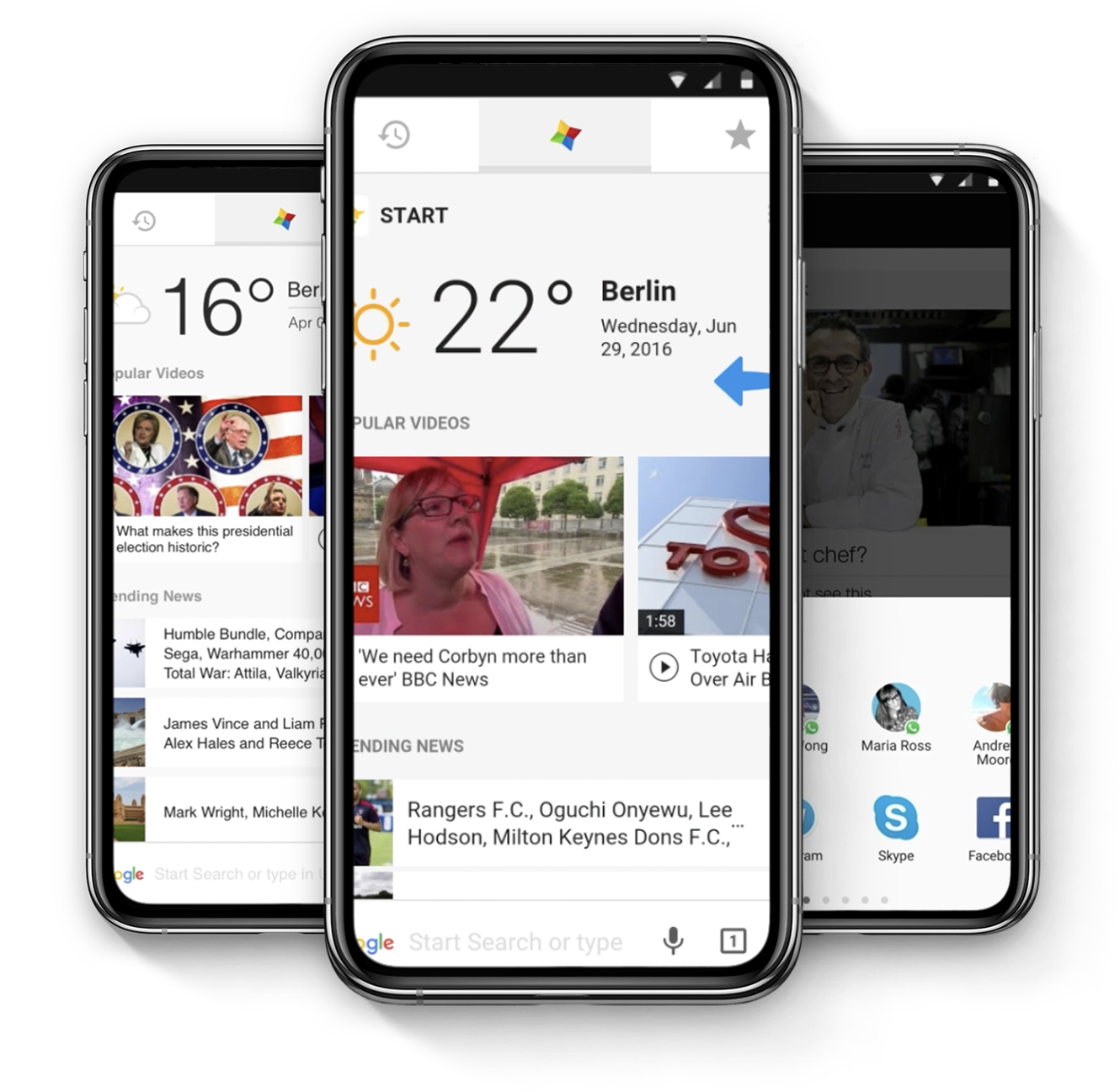
Below we compare them on syntax, performance, interop, and hiring, treating Android and backend separately. Redwerk ships production code in both through our Java software development services, including a Chromium-based Android browser built with Java and the Android SDK that passed 500,000 installs.
Kotlin vs Java at a Glance
The two languages share a runtime, a build system, and nearly all of their libraries, so the real differences are narrower than the online arguments suggest. What separates them in delivery is how much code you write for the same intent, and what the compiler catches before your users do. The seven dimensions below, from null safety to build tooling, are what actually move a delivery timeline.
Null safety
In the type system, checked at compile time
Runtime NullPointerException, eased by annotations
Boilerplate
Data classes, type inference, extension functions
Records since Java 16, more ceremony remains
Concurrency
Coroutines and structured concurrency in-language
Virtual threads since Java 21, structured concurrency in preview
Android
Google’s default, Jetpack designed Kotlin-first
Fully supported, still runs large production apps
Backend ecosystem
Ktor, plus first-class Kotlin support in Spring
Spring and Jakarta EE, deepest catalogue on the JVM
Hiring pool
Smaller, concentrated in Android developers
Largest on the JVM, easiest to staff quickly
Build tooling
K2 compiler, default since Kotlin 2.0
Mature javac, fastest incremental builds at scale
Syntax, Null Safety, and Coroutines
Kotlin’s defining feature is that nullability lives in the type system. A String cannot hold null and a String? must be unwrapped first, so the compiler blocks the path that causes most production NullPointerExceptions. Google’s Home team reported a 30% drop in NPE crashes and a 33% smaller codebase after moving new features across, per Google’s Kotlin-first documentation.
Concurrency is the other real divide. Coroutines give you suspending functions and structured scopes as language constructs, so cancellation and lifecycle handling read like sequential code. The boilerplate gap compounds too: a model needing a constructor, getters, equals, hashCode, and toString in Java collapses into one data class declaration.
Runtime Performance and Build Times (K2 Compiler)
Kotlin vs Java performance is a non-issue at runtime for almost every application, since both compile to JVM bytecode and run on the same just-in-time compiler. Kotlin adds thin wrappers in places, inline functions remove most of that overhead, and the remainder sits below the noise from your database and network calls.
Iteration speed is the more useful number, and the K2 compiler is why build times stopped being a complaint. JetBrains studied roughly 28 million development cycles from about 320,000 developers and found Kotlin cycles ran 15% to 20% shorter than Java on comparable tasks, with Java cycles stretching 9% to 17% longer as codebases grew. Java still wins on cold incremental builds in large modular projects.
Full JVM Interoperability
Interoperability is what makes this decision low-risk, and it is the fact most comparisons underplay. Kotlin compiles to the same bytecode, so a Kotlin class can extend a Java class, Java can call Kotlin functions, and both sit in one build. That leaves three options rather than one migration project:
- Add Kotlin to one new module and leave every existing Java file untouched.
- Convert files as you touch them, so migration cost rides along with roadmap work.
- Stop at whatever ratio suits your team, since many production codebases sit at 30% Kotlin for years.
Kotlin vs Java for Android Development
Android is where the answer carries the least ambiguity. Google has stated its position plainly and the tooling follows it, which raises what a Java-only team pays to keep up. That cost lands first in onboarding, when a new hire has to translate Kotlin-first Jetpack Compose documentation back into Java before writing a line of code.
Why Google Made Kotlin the Default for New Android Projects
Google announced a Kotlin-first Android at I/O 2019 and has held that line since. New projects in Android Studio default to Kotlin, more than 70 Google apps including Maps, Drive, Play, and Messages are built with it, and Google reports that Android apps containing Kotlin code are 20% less likely to crash.
Java remains fully supported, and Android will run Java bytecode for as long as the platform exists. The cost lands on ergonomics: Jetpack Compose, coroutine-based lifecycle APIs, and nearly every new sample are written for Kotlin, so a Java-only team reads the docs in translation and writes adapter code that Kotlin teams skip.
Building Modern Android Apps with MVVM, Koin, and Coroutines
Architecture is where Kotlin stops being a syntax preference and starts affecting delivery. MVVM with coroutine-backed ViewModels and a DI container gives you a screen whose state is one observable value and whose async work cancels itself when that screen closes. We documented the pattern, including why we prefer Koin to heavier DI frameworks on mid-sized apps, in our Kotlin powered Android App walkthrough.
The commercial reason this matters is onboarding speed. A codebase built this way is legible to a senior engineer within days, because the structure is conventional and the concurrency is scoped. That is what lets our Android app development services team pick up an app another vendor left half-built. On one fitness product we inherited, clearing the technical debt and shipping the delayed features moved subscriptions up 45%.
Kotlin vs Java for Backend Development
The backend inverts the Android answer almost completely. A Kotlin vs Java 2026 comparison on the server starts from where the code already lives, because most JVM backends carry a decade of Java that works. That installed base changes the question, from which language onboards engineers faster to which one protects systems already carrying production traffic.
Where Java's Enterprise Ecosystem Still Wins
Three things keep Java the default on the server. Spring and Jakarta EE were built in Java, so their documentation, samples, and years of answers to obscure configuration problems are Java-shaped. The hiring pool is also the largest on the JVM, which decides how fast you can staff under pressure.
The third reason is that Java kept moving. Virtual threads arrived in Java 21 and made blocking code cheap again, removing the strongest technical argument for coroutines on the server. Records and pattern matching absorbed much of the conciseness gap, and JDK 26, generally available in March 2026, continues that work with structured concurrency in its sixth preview. A team on a current LTS writes very different Java from a team pinned to Java 8.
When Kotlin on the Backend Is Worth It
Kotlin earns its place on the server in three specific situations, each resting on something you already have. None involve replacing working Java:
- Greenfield services in a Kotlin shop. If your Android team already writes Kotlin, one language across mobile and server lets the same engineers move between both.
- Lightweight services and internal tooling. Ktor suits jobs where Spring’s footprint exceeds what the work requires.
- Existing Spring teams who want the safety. Spring has first-class Kotlin support, so you keep the framework your team knows and gain null safety on top.
What that buys deserves stating alongside what it costs: thinner documentation coverage, a smaller hiring pool, and a compiler your build engineers need to debug. Our Java software development services team works both sides, and we start by reading the existing code against the same criteria as our Java code review checklist, because the codebase answers the question faster than a language debate.
Is Kotlin Better Than Java? A Decision Framework for Your Project
Better depends on what you are optimizing for, and the answer moves with three inputs: what you are building, how much code exists, and how you plan to staff it. The cascade below is the order we walk through with clients making this call. Read it top to bottom rather than jumping to the row that matches your preference, since the reasoning column is what generalizes past these six scenarios.

New Android app, greenfield
Kotlin
Google’s default, Kotlin-first Jetpack, fewer null crashes
Existing Java Android app, shipping
Kotlin for new modules only
Interop keeps it incremental, no release slips
Large Java backend on a current LTS
Stay on Java
Virtual threads and records closed the gap, rewrite risk is real
New service, Kotlin already in-house
Kotlin with Ktor or Spring
One language across mobile and server
Small team, frequent hiring
Java on server, Kotlin on Android
Follows the deepest hiring pool on each platform
Regulated, long-lived system
Java
Longest support timelines, deepest audit tooling
New Android App, Greenfield
Start in Kotlin and do not spend a meeting on it. The tooling defaults there, the documentation you will read is written there, and null safety pays for itself in the first month of crash reports. One caveat: if the Android engineers you can hire are Java-native, budget a ramp of days rather than weeks for a senior developer.
Large Existing Java Backend
Leave it alone and stay deliberate. A working backend on Java 21 or later already has virtual threads, records, and pattern matching, so the gains from migrating are narrow while the risk of touching authentication or billing code is real.
This is where honesty serves you better than enthusiasm. We have talked clients out of Java-to-Kotlin backend migrations more than once, because the work would have consumed a quarter of roadmap capacity to produce code that behaved the same.
Small Team, Long-Term Maintenance and Hiring
Hiring reality should outweigh language features here, and it points two ways at once. On Android, Kotlin is the larger and more current pool, so staffing Java-only Android work gets harder each year. On the server the reverse holds, and a small team replacing a backend engineer will find far more Java candidates at the same seniority.
The split answer is usually right for small teams. Kotlin on Android, Java on the server, and one shared set of review standards across both.
Migrating from Java to Kotlin Without a Full Rewrite
Full rewrites are how language migrations turn into cautionary tales. Interop lets both languages run in one build indefinitely, so the version that succeeds is a series of small reversible steps taken while you keep shipping. The two failure points below, one at the interop boundary and one in code review, trip up almost every first migration.
Interop Gotchas That Trip Up First-Time Migrations
Interop works cleanly until it meets the edges of the type system, and the same handful of issues account for most early friction. Budget a sprint of unglamorous cleanup instead of assuming the converter handles it:
- Platform types. Java values arrive carrying no nullability information, so your compile-time guarantee quietly disappears at the boundary. Annotating Java APIs with
@Nullableand@NonNullis the fix that holds. - The IDE converter. It reaches compiling code and stops short of idiomatic code, so converted files arrive littered with
!!operators andvarwhere the intent wasval. - Java-facing signatures. Static members, checked exceptions, and SAM conversions behave differently across the boundary, which is why
@JvmStatic,@JvmOverloads, and@JvmNameexist. - Reflection-heavy frameworks. Some JPA, Hibernate, and mocking setups need the
all-openandno-argplugins, since Kotlin classes are final by default.
How Code Review Has to Change Once Kotlin Lands
Mixed codebases need review rules that Java-only teams never had reason to write down. The recurring failure mode is Kotlin that compiles cleanly and still reads like Java: !! standing in for real null handling, GlobalScope where a scoped coroutine belongs, and mutable state leaking out of a data class.
We keep this written down so the argument happens once instead of on every pull request, and the checks we apply live in our Kotlin code review checklist. Whoever reviews a mixed codebase has to be fluent in both languages, because the expensive mistakes cluster at the boundary.
The Bottom Line for Your Android or Backend Project
For a new Android app, Kotlin is the stronger default, and the case for starting fresh in Java has largely run out. For an established server codebase on a current LTS, staying put and adopting the newer language selectively in new modules delivers most of the upside at a fraction of the risk. Both directions fail the same way, when the choice gets made on preference and justified afterwards.
What settles it is a look at the code you have, the team you can staff, and the maintenance horizon you are committing to. Our mobile app development services cover both languages across Android and the JVM, and the engineers who review your codebase are the people who would work on it. Talk to us about your Android or Java project, or contact us for a technical read.
Frequently Asked Questions
Is Kotlin replacing Java?
On Android, largely yes for new code, since it is the default in Android Studio and the Jetpack libraries are designed for it first. On the server the picture differs: Java holds the majority of JVM backends in production, the largest hiring pool, and the deepest framework ecosystem. Expect both to run side by side in the same organizations for a long time.
Is Kotlin faster than Java?
At runtime the two are effectively equal, because both compile to JVM bytecode and execute on the same just-in-time compiler. Small wrappers appear in places and inline functions remove most of that cost, leaving a difference far below the noise from database and network work. Developer iteration speed is where a measurable gap shows up, and JetBrains’ own study of development cycles put Kotlin 15% to 20% ahead on comparable tasks.
Can Kotlin and Java live in the same codebase?
Yes, and this is how most teams adopt it. Both compile to the same bytecode inside one build, a Kotlin class can extend a Java class, and Java code can call Kotlin functions, so you can add one module and leave the rest untouched. The edges needing attention are nullability annotations on your Java APIs, static members crossing the boundary, and reflection-heavy frameworks, all of which have standard fixes.
See how we leveraged Java and Android SDK to build Searchturbo, a Chromium-based mobile browser with over 500K installs