Almost every engineer you interview in 2026 can prompt a language model. Far fewer have shipped an AI feature that survived production traffic, a security review, and a quarter of degrading output. That gap is where first-year AI budgets go.
This hire AI developers guide starts with one rule: decide whether the work is model building, application engineering, or evaluation, then vet candidates on systems they put in front of real users rather than models they fine-tuned in a notebook. Role clarity, more than seniority, is what most failed AI hires got wrong.
What follows covers role types, vetting questions, engagement models, and cost drivers. It comes from a team that ships production AI agents with real memory, escalation rules, and full audit logs, and trains models on client data rather than benchmark sets. Every judgement call below is one we make when scoping artificial intelligence development services, where the distance between a convincing CV and a working system tends to show up inside the first sprint.
What Kind of AI Developer Do You Actually Need?
Most failed AI hires begin with a job title instead of a problem statement. “AI developer” covers three disciplines that share vocabulary and little else, so the first step in any hire AI developers guide is deciding which one your roadmap needs. Pick wrong and you pay research salaries for someone whose real job is wiring a model API into billing.
A model trained on your own data
ML engineer
Training pipeline, evaluation harness, retraining plan
Python, Azure ML Studio, feature stores
An agent inside your product
AI application engineer
Orchestration, tool calls, memory, escalation, audit logs
LangChain, LangGraph, CrewAI, your backend stack
Better output from a third-party model
LLM and evaluation specialist
Prompt suites, evaluation sets, output regression tests
Evaluation tooling, structured output schemas
All three at once, on a deadline
A staffed team, not one person
A delivery plan with a named owner per layer
Named specialists, not one generalist
ML Engineers: Model Training, Data Pipelines, Evaluation
ML engineers earn their salary on the parts nobody demos: labeling strategy, feature engineering, class imbalance, and the evaluation harness that tells you a retrain made things worse. The model is the smallest artifact they produce.
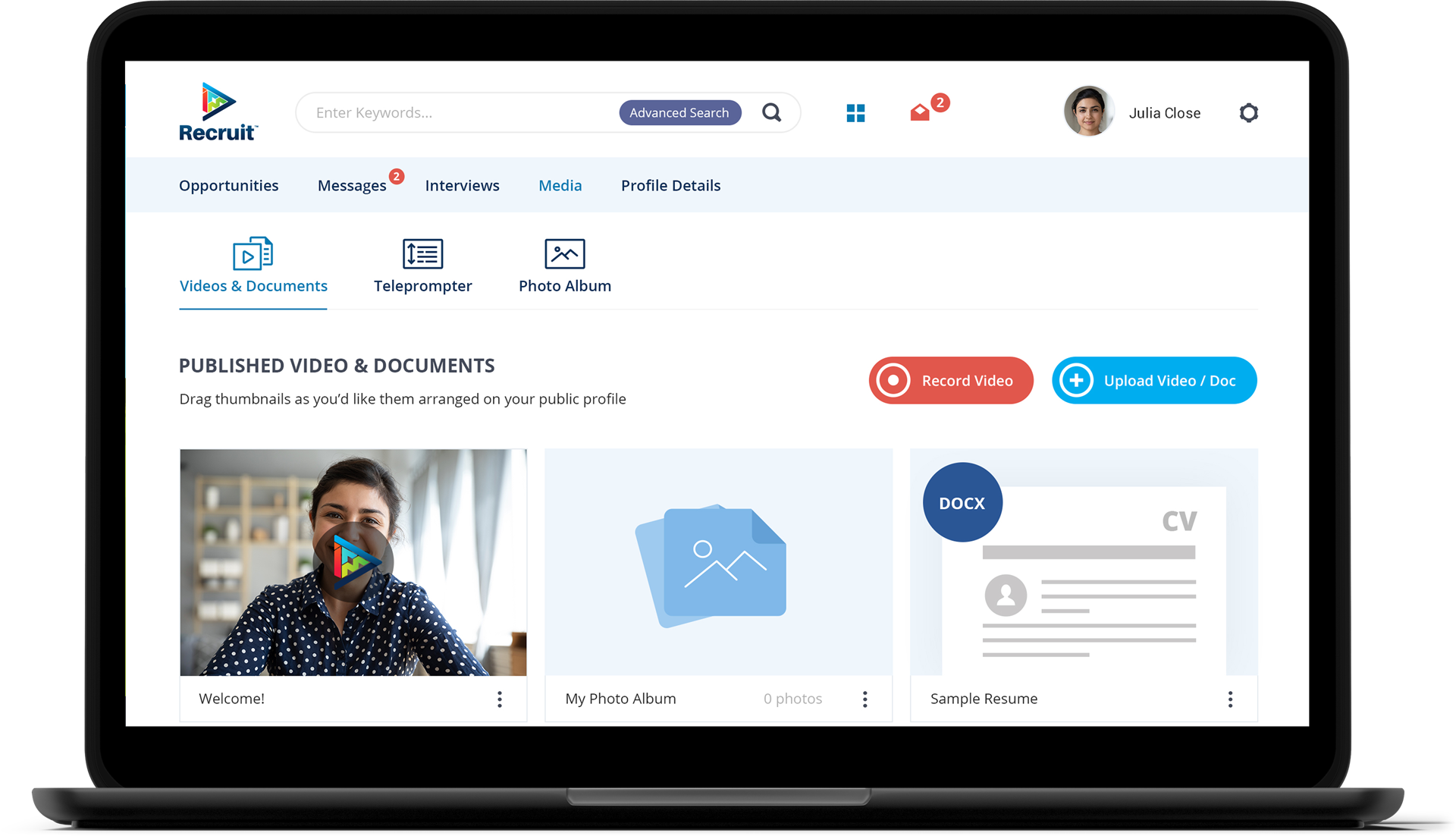
It is also the most data-dependent hire you will make. Redwerk’s ML work on a recruiting platform, where we used Azure ML Studio to train a CV-matching model on more than 1.5 million records, spent more calendar time on data shape than on model selection. A candidate who only talks about architectures has never owned a training set that messy. Hire here when your advantage is data you own.
AI Application Engineers: Agents, Orchestration, Integrations
This is the role most mid-market teams need and most often mislabel. An AI application engineer builds the system around the model: what the agent may do, what it hands back to a human, what it remembers, what it logs. Day to day:
- Tool and function calls against your APIs, with retries and timeouts that assume the model will sometimes be wrong.
- Memory that is scoped and expirable rather than an ever-growing context blob.
- Escalation rules, so an uncertain agent stops instead of improvising.
- Instrumentation on every step, because “the AI did something odd” is not a debuggable report.
- Cost and latency inside a budget the product can carry at full volume.
That list is close to the working definition of Redwerk’s AI agent development services. Engineers who are good at it came from backend work and picked up orchestration.
LLM and Prompt Specialists: Where They Fit
Prompt engineering as a standalone full-time job is rare below enterprise scale, and making it your first AI hire is usually a mistake. Evaluation is the underrated half of that skill set: a test set from real traffic, a definition of a correct answer in your domain, and a regression caught before a customer finds it.
At most mid-market companies this sits with the application engineer or a QA specialist. Ask for it explicitly anyway, because teams that skip evaluation ship AI features they cannot prove are working.
Vetting Questions That Reveal Shipped AI Experience
AI experience is unusually easy to fake, because the vocabulary is public and the tutorials are excellent. The practical answer to how to hire an AI developer is to interview for scar tissue: anyone who has run an AI system in production carries a stock of specific, slightly annoyed stories, and those are the signal. Work the three groups below in order, because production experience filters for the other two.
Production Readiness
Start here and be blunt. You are establishing one thing: whether this person has been on call for something a model did.
- What volume of real traffic did your AI feature handle, and what fell over first?
- How did you find out when output quality dropped? Walk me through the alert.
- Show me how you logged an agent’s decision, and who could read it.
- What did you ship and later turn off, and why?
The last one matters most, because candidates who only built demos never had to kill one. In AI custom software development work, the audit trail and escalation path are what clients first call overhead, and what makes the system defensible.
Framework Depth in the Wild
Framework names on a resume tell you almost nothing. What the choice cost them tells you a lot. Ask which orchestration framework they picked, then what it made hard.
Good answers are specific and mildly critical. Someone who genuinely shipped on LangChain can name the parts of it they ended up ripping out, which is the same distinction that emerged when we benchmarked the top LLM frameworks against real workloads instead of demos. Push on state next, asking whether they chose an explicit graph or a role-based crew and what that cost them at runtime, because that is the point where LangGraph vs CrewAI stops being a preference and becomes an operational constraint. If they have migrated between the two, ask what broke: the step from a linear chain to a stateful graph is where teams discover their retry logic never did anything, which is what we found working through LangChain vs LangGraph.
Finish with the cheapest probe on the list. Ask what they would build with no framework at all: real depth shows up as a two-sentence description of the loop and state handling underneath, and it separates the people who understand the abstraction from the people who depend on it.
Data Security on Proprietary Datasets
If your project touches customer records, contracts, health data, or anything an auditor will ask about, this decides the hire. It is where candidates most often have a confident answer and no scars.
Ask what data left their environment, how they handled personally identifiable information inside prompts, what retention terms they had with their model provider, and who signed off. Control names matter less than whether the candidate has had that conversation with a security team and lost part of it. For regulated work, expect private deployment and a record of which model version saw which data.
In-House, Freelancer, or Dedicated AI Team?
Once you know which role you need, the second decision is how to hold it, and that turns on how long the work lasts and how many disciplines it touches. The rough rule: one bounded deliverable suits a freelancer, a permanent capability suits an employee, and a multi-discipline build with a date on it suits a team.
Who owns model evaluation
Nobody, the contract ends at delivery
The same engineer who built the feature
A named evaluation owner, separate from the builder
When output quality drifts
Out of scope after delivery
Your one AI hire is on call alone
An on-call rota across the team
Access to proprietary data
Hardest to approve, an outsider needs a security exception
Simplest, staff are already inside your security perimeter
Granted by contract, with NDAs and audit logging
Disciplines covered at once
One, the discipline the contract names, usually AI application engineering
One, the discipline the job spec names
Three: ML engineering, AI application engineering, and LLM evaluation
Breaks down when
The feature must keep running after the invoice is paid
The roadmap needs model training, application engineering, and evaluation at once
No one internal is empowered to decide quickly
When a Freelancer Is Enough
A freelancer is right when the deliverable is bounded and someone on your side can own it afterwards. Think a proof of concept, an evaluation harness, or a migration between model providers.
The failure mode is predictable. Freelance AI work arrives as a working notebook and a thin seam into your product, and the only person who understands that seam invoices their last hour and leaves. If it must run unattended next quarter, that is a maintenance problem at a discount.
When an In-House Hire Makes Sense
Hire in-house when AI stops being a project and becomes part of the product. A permanent employee accumulates the context that makes your second and third AI feature cheaper than the first: your data quirks, your tolerance for a wrong answer, your review process.
The catch is that the job spec you write today is usually wrong. Teams post for a generalist AI engineer, interview against a research skill set, then watch that hire spend three quarters on backend integration nobody scoped. Write the spec against the deliverable instead, and keep the roadmap moving while the search runs. Our delivery engineers use AI-assisted software development tooling including Codex, CodeWhisperer, and AutoML, which raises what the existing team can absorb without pretending to replace the specialist.
When a Dedicated AI Team Wins
A dedicated team wins when the build needs several disciplines at once and a date. An AI development team gives you an ML engineer, an application engineer, and an evaluation owner without running three hiring processes at once.
The sharper argument is evaluation coverage. However senior a solo hire is, they end up grading their own homework: whoever wrote the prompt chain also decides whether its output is good enough. Splitting those two jobs across different people is the structural reason to buy a dedicated development team rather than scramble to hire AI engineers into a headcount plan written before anyone knew the roadmap. It still fails without one internal person who can decide quickly.

What Does It Cost to Hire AI Developers?
There is no single number, and anyone who offers one without seeing your requirements is selling something. Anchor on public labour-market data plus your own cost drivers.
For a US baseline, the BLS Occupational Outlook Handbook puts median pay for data scientists, the closest tracked occupation to hands-on ML work, at $120,230 a year as of May 2025, and projects the field growing 35 percent between 2025 and 2035. The same handbook’s May 2025 figures for computer and information research scientists put the research end at a $140,300 median. Those two brackets are why any ai developer cost estimate built on 2023 salary data now reads low.
What salary tables miss is the part specific to AI work: headcount is often not the largest line at all. On model-heavy projects, compute and data preparation routinely cost more than the engineer running them, and the ratio shifts again after launch, when inference becomes a recurring bill rather than a build cost.
The Real Cost Drivers
- Model work versus application work. Training on your own data pulls in labeling, compute, and a repeating evaluation loop. A hosted model shifts spend to per-call inference, which grows with usage.
- Data volume and condition. Volume is a compute cost. Condition is a people cost, and the one that surprises budgets: inconsistent schemas, missing labels, duplicates.
- Compliance and data residency. Regulated data, a guaranteed region, or a private deployment turns a one-week integration into a multi-week architecture exercise.
- Integration surface. An agent that reads one API is cheap. One that writes to your CRM, billing, and ticketing is a distributed-systems project with a model attached.
How to Evaluate a Development Partner's Real AI Delivery
Vendor evaluation fails the way candidate evaluation does: everyone has a deck, few have a system running with users on it. Stanford HAI’s AI Index Report 2026 found that 88 percent of surveyed organizations now use AI in at least one business function, while agent deployment stays in the single digits across nearly all functions. Most of the market is experimenting, and your job is to find the part that is not, whether you hire AI developers onto your payroll or buy the capability. Four checks sort them:
- Ask for the architecture, not the outcome. A partner who shipped an agent describes its memory model, escalation rules, and audit logging in the first call.
- Check the engineering underneath. Most AI projects fail as ordinary software projects, through bad data plumbing and no observability. A long delivery record outside AI predicts that better than an AI portfolio.
- Test the tech match. Ask who would be assigned and what they built in your exact stack. Names and prior systems mean bench specialists; a capability statement means someone plans to learn on your budget.
- Probe how they work without a full spec. Nobody knows what a model can do in your domain until it is tried, so ask how they absorbed a mid-build change.
Those last two are where Redwerk’s clients say we earn the contract. AI scope always moves after the first evaluation round, and that is exactly when a rigid vendor stalls.
Judge AI Hires by What They've Shipped
The hires that work out are rarely the ones with the best model vocabulary. They are the ones matched to the deliverable, tested on systems that carried real users, and placed in an engagement model that fits how long the work will last.
Get those wrong and the failure is expensive and slow to spot, because a demo looks the same either way for two months. If you would rather talk it through with engineers who have shipped this kind of work, contact us.
FAQ
What's the difference between an AI developer and an ML engineer?
An ML engineer builds and maintains models: training pipelines, feature engineering, evaluation harnesses, retraining schedules. “AI developer” is broader and usually means an application engineer integrating existing models through orchestration, tool calls, and memory.
How long does it take to hire an AI developer in 2026?
Longer than the equivalent backend search, because the qualified pool is smaller and counter-offers are common at the senior end. The bigger delay is self-inflicted: teams advertise a generalist role, interview against the wrong skill set, and restart. Deciding which discipline you need before the job goes live saves more weeks than any sourcing tactic.
Can I hire an AI developer part-time or fractionally?
Yes, for bounded work such as an evaluation harness, an architecture review, or a proof of concept. It works poorly for anything running unattended, since part-time arrangements rarely cover monitoring or incident response.
What red flags should I watch for on an AI developer's resume?
Framework names with no trade-offs described, projects that end at a demo, no mention of evaluation or monitoring, and an inability to say what they shut off and why.
What does an AI development team cost per month?
It depends far more on the mix of roles than on any single rate. Model training carries compute and data-preparation costs alongside salaries, while hosted-model work shifts spend toward per-call inference. Ask any partner to split a quote into people, compute, and model costs.
See the AI recruitment app Redwerk built to match candidates to roles, trained on 1.5M+ records and later acquired by a US staffing giant.